معرفی
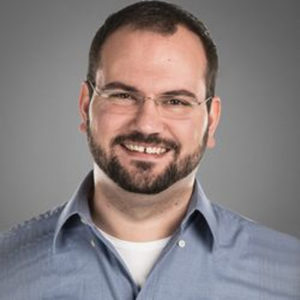
Nathan J Young is an Associate Professor/Senior Lecturer of Swedish as a Second Language at the Department of Swedish, Faculty of Arts and Humanities, Linnæus University. His work bridges linguistic theory with computational applications, focusing on the intersection of language variation, phonetics, and technology.
Dr. Young received his Ph.D. in Linguistics from Queen Mary, University of London, where he completed his doctoral dissertation titled "Rhythm in Late-modern Stockholm – Social stratification and stylistic variation in the speech of men." His educational background is rooted in "Labovian" sociolinguistics, a quantitative field dedicated to studying variation and change within language sound systems.
Young's research spans multiple areas of linguistics with a particular focus on Nordic languages. His work encompasses acoustic phonetics, language variation and change, contact linguistics, and the application of big data methodologies to linguistic analysis. He is particularly known for his investigations into European multiethnolects, forensic linguistics, and speech-language technology. His research demonstrates how computational approaches can scale linguistic analyses and address questions of representativity in language studies, especially with the integration of AI.
As an educator, Young teaches courses in second language acquisition, language typology, phonetics and phonology, and theory and methodology. His teaching is informed by his research expertise, providing students with both theoretical foundations and practical applications in linguistic analysis.
Young leads the Autophon project, an open-source initiative developing automatic phonetic annotation and forced alignment tools for Nordic languages. This project has resulted in multiple language-specific tools including SweFA (Swedish), DanFA (Danish), NoFA (Norwegian), FarFA (Faroese), and IceFA (Icelandic). Autophon represents a significant contribution to linguistic research infrastructure, making sophisticated phonetic analysis more accessible to researchers across the Nordic region.
His scholarly contributions demonstrate a consistent focus on methodological innovation in linguistic research. Young has published extensively on topics ranging from rhythm in Stockholm Swedish to the emergence of new pronouns in multiethnolects, and from forensic speaker comparison to the application of deepfakes in sociolinguistic experiments. His work often addresses how computational methods can enhance traditional linguistic approaches while maintaining rigorous theoretical foundations.