معرفی
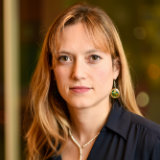
Natascha S. Neudorfer serves as Professor of Political Economy at Heinrich Heine University Düsseldorf within the Department of Political Science (Faculty of Philosophy), holding a chaired professorship focused on political economy and conflict analysis. Previously, she held positions as Associate Professor and Birmingham Fellow in International Security at the University of Birmingham, and served as postdoctoral researcher and lecturer at Ludwig Maximilian University of Munich and Amsterdam University College.
Her academic foundation includes a PhD in Political Economy from the University of Essex, complemented by research and teaching experience across diverse institutions including Berkeley, Duke, Konstanz, and Limerick. This multinational trajectory has cultivated expertise in navigating interdisciplinary research environments.
Neudorfer specializes in the intersection of corruption and civil conflict, employing advanced quantitative methods (machine learning, inferential statistics) alongside qualitative and mixed-methods approaches. Her work spans political economy, comparative politics, and international relations with geographic focus on both developing regions (particularly Africa) and developed nations. Current investigations examine gendered corruption pathways, institutional design in post-conflict settings, and machine learning applications for conflict prediction.
Recent publications reveal methodological innovation through machine learning integration in political science, with sustained emphasis on corruption dynamics in electoral processes and peace agreements. Her research demonstrates consistent cross-regional applicability from Eastern European elections to African conflict resolution.
Key recognition includes the Birmingham Fellowship in International Security. She contributes significantly to scholarly discourse as associate editor of the Journal of Global Security Studies.
- Birmingham Fellow in International Security
Neudorfer actively mentors emerging scholars and leads collaborative projects including the Dataset of Political Agreements in Internal Conflicts (PAIC), which has become a critical resource for conflict researchers. Her work receives support from academic research frameworks enabling cross-continental data collection and methodological innovation.
She operates within globally distributed research networks, leveraging experience from multicultural teams formed during her tenure at institutions across Europe and North America. Current projects emphasize computational approaches to analyze power-sharing mechanisms and corruption networks in transitional societies.