معرفی
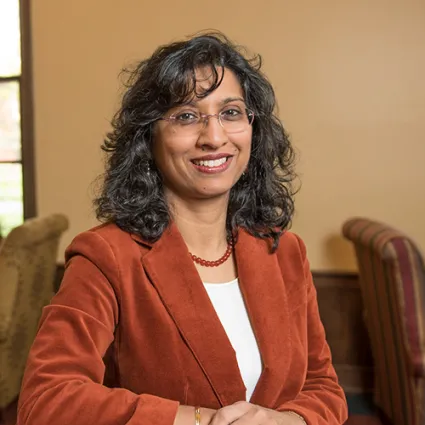
Nasia Anam is an Assistant Professor in the Department of English at the University of Nevada, Reno, where she teaches Global Anglophone Literature and related courses in postcolonial and migration studies. She joined the university in 2018 and is affiliated with the Core Humanities program. Her academic background includes prior teaching roles at Princeton University and Williams College.
- Ph.D., Comparative Literature, University of California, Los Angeles (2016)
- M.A., English Language and Literature, University of Michigan, Ann Arbor (2007)
- A.B., English Literature, University of Chicago (2004)
Her research centers on migration, displacement, and spatial representations of Muslim communities in literature, drawing from interdisciplinary methods in Postcolonial Studies, Ethnic Studies, South Asian and North African Studies, Islamic Studies, and Urban Studies. She employs a comparative framework across Anglophone, Francophone, and Bangla-language literary traditions.
Her recent publications explore themes such as the Global Anglophone as a genre, refugee encampments as colonial spaces, dystopian migration narratives, and the racialization of Muslim migrants. These works appear in journals like Interventions, Journal of Narrative Theory, and ASAP/Journal, reflecting a strong focus on post-9/11 literary responses and the evolving categorization of global literature.
She has no listed scientific awards or fellowships in the provided text.
Nasia Anam mentors students through graduate-level courses and research supervision in areas such as migration literature, postcolonial theory, and global cities. Though no formal list of advisees is provided, her involvement in advanced seminars like ENG 783 and ENG 788 indicates active engagement in graduate education. She has not disclosed external grant funding, but her ongoing book projects and edited volume suggest sustained scholarly productivity.
She is currently working on two major projects: Muslim Heterotopias: Colonial Logics of Space in Literatures of Migration, which examines spatial control of Muslim migrants in Western literature, and a second book comparing colonial and postcolonial Bengali labor figures. Additionally, she is editing a volume on post-9/11 Muslim perspectives across literature, film, and visual art, indicating leadership in shaping contemporary discourse.
حوزههای پژوهشی