معرفی
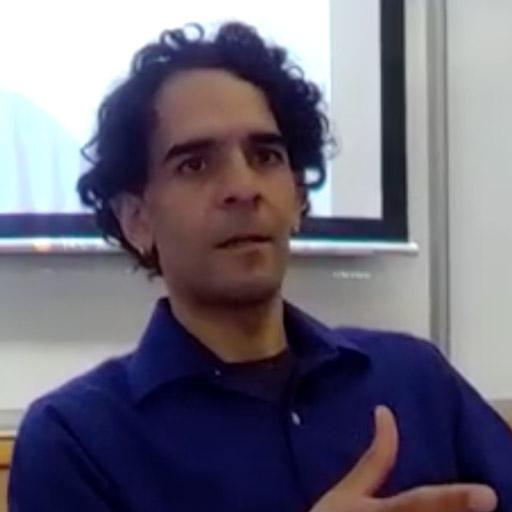
Nabeel Hamid is an Associate Professor in the Department of Philosophy at Concordia University, currently on sabbatical until June 30, 2026. His academic work bridges medieval, early modern, and nineteenth-century German philosophy with exceptional depth across linguistic traditions.
His educational foundation includes a PhD in Philosophy from the University of Pennsylvania (2018), an MA in Philosophy from the University of British Columbia (2012), an MA in Applied Linguistics from Macquarie University (2010), and a BA in Philosophy from the University of Wisconsin-Madison (2004).
Hamid's research centers on the evolution of philosophical systems across historical contexts. He specializes in German philosophy from the 17th-19th centuries, with groundbreaking work on Clauberg's reception of Cartesianism, Kant's theories of causation and teleology, and Dilthey's foundations of historical science. His parallel expertise in Latin and Arabic medieval philosophy—particularly Avicenna, Averroes, and Suarez—creates unique cross-traditional dialogues on causation. This dual focus reveals how scholastic frameworks transformed through early modern scientific revolutions.
His recent publications (2021-2025) demonstrate rigorous engagement with metaphysical structures across eras. Key patterns include the persistent tension between divine and secondary causality, teleological frameworks in scientific explanation, and the interplay between psychological foundations and historical methodology. His work consistently situates figures like Wolff and Leibniz within broader empirical and critical movements, showing how philosophical systems respond to emerging scientific paradigms.
Hamid actively mentors graduate students in the Philosophy MA program at Concordia, accepting new thesis supervision inquiries. His teaching portfolio includes specialized courses on Islamic World philosophy, 17th/18th-century European thought, and advanced seminars on Kant and Leibniz, reflecting his commitment to transmitting complex historical-philosophical frameworks to new generations.