معرفی
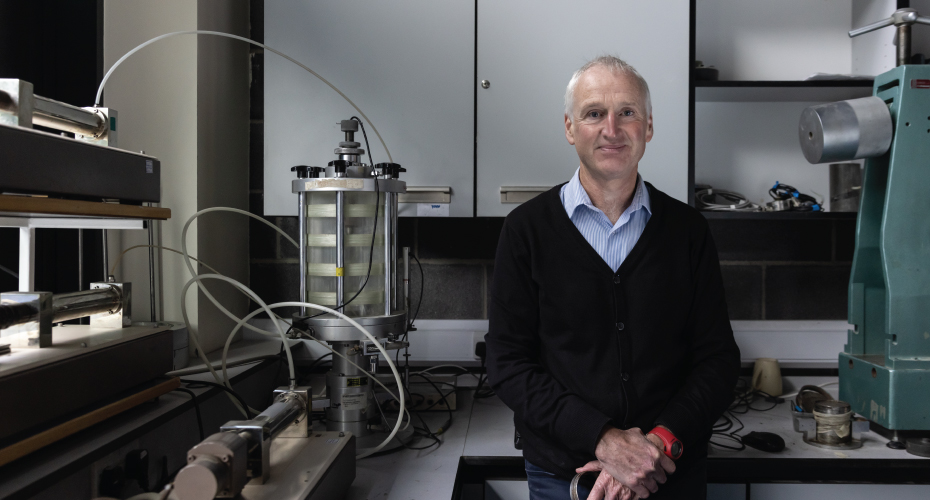
Professor Mohamed Shahin is a faculty member at Curtin University's School of Civil and Mechanical Engineering, part of the Faculty of Science and Engineering. He currently holds the position of Professor and serves in the Office of the Provost. His primary roles include advancing research in geotechnical engineering and mentoring students. He is affiliated with multiple professional societies, including Engineers Australia, American Society of Civil Engineers (FASCE), and the International Society for Soil Mechanics & Geotechnical Engineering.
Prior to his current role, he has held positions including Associate Professor (2012–2020), Senior Lecturer (2009–2011), and Lecturer (2006–2009) at Curtin University. His research focuses on computational geomechanics, ground improvement techniques (e.g., bio-cementation and geopolymer stabilization), and transportation geotechnics. He has pioneered innovations in microbial-induced calcite precipitation (MICP) for soil stabilization and has contributed extensively to railway track dynamics and infrastructure resilience.
Shahin has authored over 200 peer-reviewed articles, edited several books, and holds editorial roles in journals like Geosciences and Canadian Geotechnical Journal. His work has earned prestigious awards, including the Fredlund Award (2018) and recognition in global rankings like Research.com. He actively promotes sustainable engineering solutions and has supervised numerous graduate students, fostering the next generation of geotechnical professionals.
His research extends to subsea infrastructure, corrosion-resistant alloys, and AI-driven modeling, addressing challenges in offshore pipelines and environmental geotechnics. He leads initiatives in ground improvement for transportation systems and collaborates internationally on projects involving bio-cementation and geopolymer applications.
Awards highlight his contributions to both research and teaching, including awards from Curtin University for excellence in innovation and pedagogy. His work bridges theoretical advancements with practical applications, ensuring civil infrastructure resilience in diverse environments.