معرفی
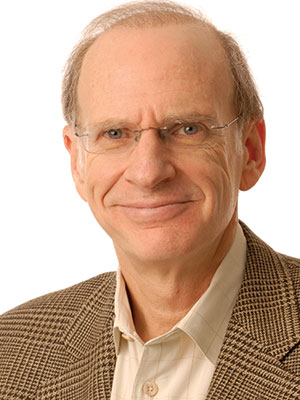
Mitchell Gans is the Rivkin Radler Distinguished Professor of Law at the Maurice A. Deane School of Law, Hofstra University. He also serves as an Adjunct Professor of Law at the NYU School of Law, where he teaches estate and gift tax to IRS attorneys. He is an Academic Fellow of the American College of Trust and Estate Counsel and actively contributes to legislative policy as a member of a New York State advisory committee on trust law revision.
His research focuses on estate and gift taxation, federal transfer taxes, trust and estate planning, and tax compliance under Circular 230. He is a frequent lecturer for ALI-ABA, the American College of Trust and Estate Counsel, and the ABA. His work explores valuation challenges, retroactive tax policies, and the intersection of state property rights with federal estate taxation.
The recent articles reflect a sustained scholarly focus on evolving tax regulations, particularly concerning GRATs, Section 2053 deductions, carryover basis, and postmortem rights. The publications demonstrate deep engagement with IRS guidance, legislative changes such as the Pension Protection Act, and high-profile estate cases like Michael Jackson’s, indicating both academic rigor and practical relevance.
His scientific recognition includes:
- Rivkin Radler Distinguished Professor of Law
- Academic Fellow, American College of Trust and Estate Counsel
Professor Gans has advised numerous professionals and policymakers through lectures, publications, and committee work. Though specific students are not listed, his role as a teacher at both Hofstra and NYU indicates significant mentorship. He has not received public grant funding mentioned in the text, but his work is supported through institutional and professional affiliations. He has co-authored the Circular 230 Deskbook and published extensively in journals such as Tax Notes, Virginia Tax Review, and Notre Dame Law Review.
He is actively involved in tax policy discussions and legislative reform, particularly in New York trust law. His work bridges academic scholarship and real-world tax practice, influencing both practitioners and regulators.