معرفی
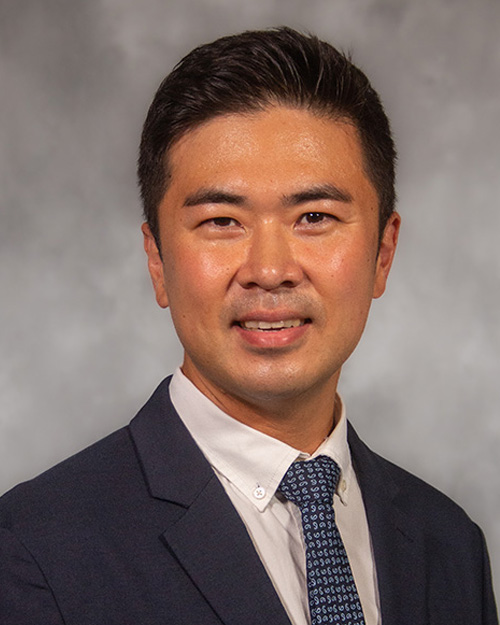
Ming Wu, PhD, serves as an Adjunct Associate Professor in the Department of Physical Medicine and Rehabilitation at Northwestern University's Feinberg School of Medicine. His research is conducted at the Shirley Ryan AbilityLab in Chicago, where he develops robotic interventions to improve mobility for patients with neurological impairments.
Education:
- PhD, Tsinghua University (2003)
Dr. Wu's research centers on robotic gait rehabilitation for stroke, spinal cord injury, and cerebral palsy populations. He pioneered the cable-driven robotic gait training system that applies precise forces to legs and pelvis during treadmill walking. His work investigates motor control mechanisms and neural adaptations through perturbation-based training, focusing on weight shifting, balance control, and locomotor recovery. Current projects integrate robotics with neuromodulation to enhance motor learning retention.
Analysis of his 2022-2025 publications reveals consistent innovation in robotic rehabilitation methodologies. Key trends include intermittent adaptation protocols for motor learning retention, cortical response measurements during constraint-force training, and trunk support systems for pediatric cerebral palsy. His work bridges engineering and clinical practice through randomized controlled trials at Shirley Ryan AbilityLab.
Dr. Wu has not reported scientific awards in his institutional profile.
He mentors graduate students and postdoctoral researchers within Shirley Ryan AbilityLab's interdisciplinary environment, though specific advisees are not listed. His research is supported by federal and foundation grants enabling clinical translation of robotic systems, with emphasis on feasibility studies and randomized controlled trials for novel interventions.
Dr. Wu operates within Shirley Ryan AbilityLab's Neurorehabilitation and Robotics Research Lab, collaborating with clinicians, engineers, and neuroscientists. His team focuses on translating cable-driven robotic systems into clinical practice, with current work emphasizing home-based applications and integration with non-invasive neuromodulation techniques for enhanced rehabilitation outcomes.