معرفی
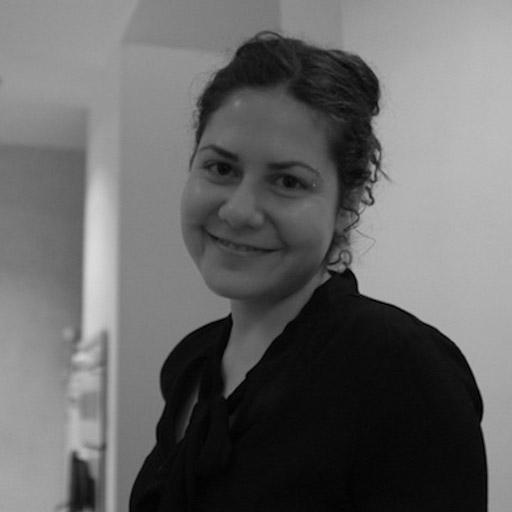
Mine Islar serves as Associate Professor in the Department of Food and Resource Economics at the University of Copenhagen's Faculty of Science, specifically within the Section for Global Development. She additionally holds a position as Senior Lecturer at Lund University Centre for Sustainability Studies (LUCSUS). Her academic journey began with a PhD in sustainability science from LUCSUS, Lund University, establishing her expertise in political ecology and environmental justice.
Her research interests focus on transformative governance, social and environmental justice, and collective action toward sustainability, with particular emphasis on both urban and rural settings in the Himalaya region. She has developed significant expertise in energy transition dynamics, post-growth welfare systems, and the plural values of human-nature relationships in glacierized environments. Her work bridges political ecology, climate justice, and sustainability science, addressing critical challenges at the intersection of ecological and social systems.
Dr. Islar's scholarly output demonstrates consistent impact across multiple domains, with publications addressing degrowth pathways, energy transitions in Nepal, post-carbon societies, and climate justice frameworks. Her research reveals a strong thematic focus on alternative economic models that decouple welfare from growth while addressing ecological constraints. The publications collectively emphasize participatory approaches to sustainability transitions and the political dimensions of environmental change.
- Lead Author for UN Intergovernmental Panel on Biodiversity and Ecosystem Services (IPBES) 2017-2020
- Extensive media coverage with articles picked up by 31 news outlets
- Significant academic impact with one Nature article receiving 397 Scopus citations
- Policy influence with research referenced in 8 policy sources
She actively supervises PhD students and postdoctoral researchers while leading multiple externally funded projects. Her collaborative approach is evident in projects that bring together researchers from social sciences, environmental science, and economics. Dr. Islar's work demonstrates strong engagement with both academic and policy communities, particularly through her IPBES involvement and collaborations with international stakeholders. Her laboratory and research team focus on sustainability transitions, with particular attention to energy systems and welfare models that operate beyond growth paradigms.