معرفی
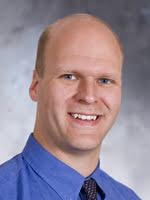
Mike Wallinga serves as a Lecturer in the Department of Computer Science at Northwestern College while concurrently holding a quarter-time position as Director of Institutional Research. With expertise spanning computational science and statistics, he teaches core computer science courses including introductory programming, data structures, databases, and parallel computing systems.
His academic credentials include:
- Ph.D. in computational science and statistics from the University of South Dakota
- M.A. in computer science from the University of South Dakota
- B.A. in computer science and mathematics from Northwestern College
Dr. Wallinga's research bridges bioinformatics, parallel computing, and pedagogical innovation. His bioinformatics work develops novel multiple sequence alignment algorithms using morphing techniques and particle swarm optimization, while his parallel computing research explores multi-core architectures for biological data processing. In computer science education, he designs immersive learning experiences such as semester-long game projects to engage programming students.
Publication analysis reveals a strong focus on computational biology (71% of recent works), particularly multiple sequence alignment methodologies that dominated his 2017 output. His research trajectory shows progression from algorithmic development (2015-2017) toward educational innovation (2019) and theological integration in computing (2021), demonstrating interdisciplinary breadth within computer science.
Recognition includes:
- Northwestern's 2018 Faculty/Staff Inspirational Service Award
As a programming competition coach, he mentored two Northwestern College teams to global top-100 rankings in the ACM International Collegiate Programming Contest. His applied research extends to institutional analytics through his directorship, where he develops data-driven decision support systems using database technologies and visualization dashboards. Professional memberships include the Association for Institutional Research and Association for Computing Machinery.
He maintains active leadership in competitive programming initiatives, creating structured team environments that prepare students for high-stakes algorithmic challenges through rigorous practice regimes and strategic problem-solving frameworks.