معرفی
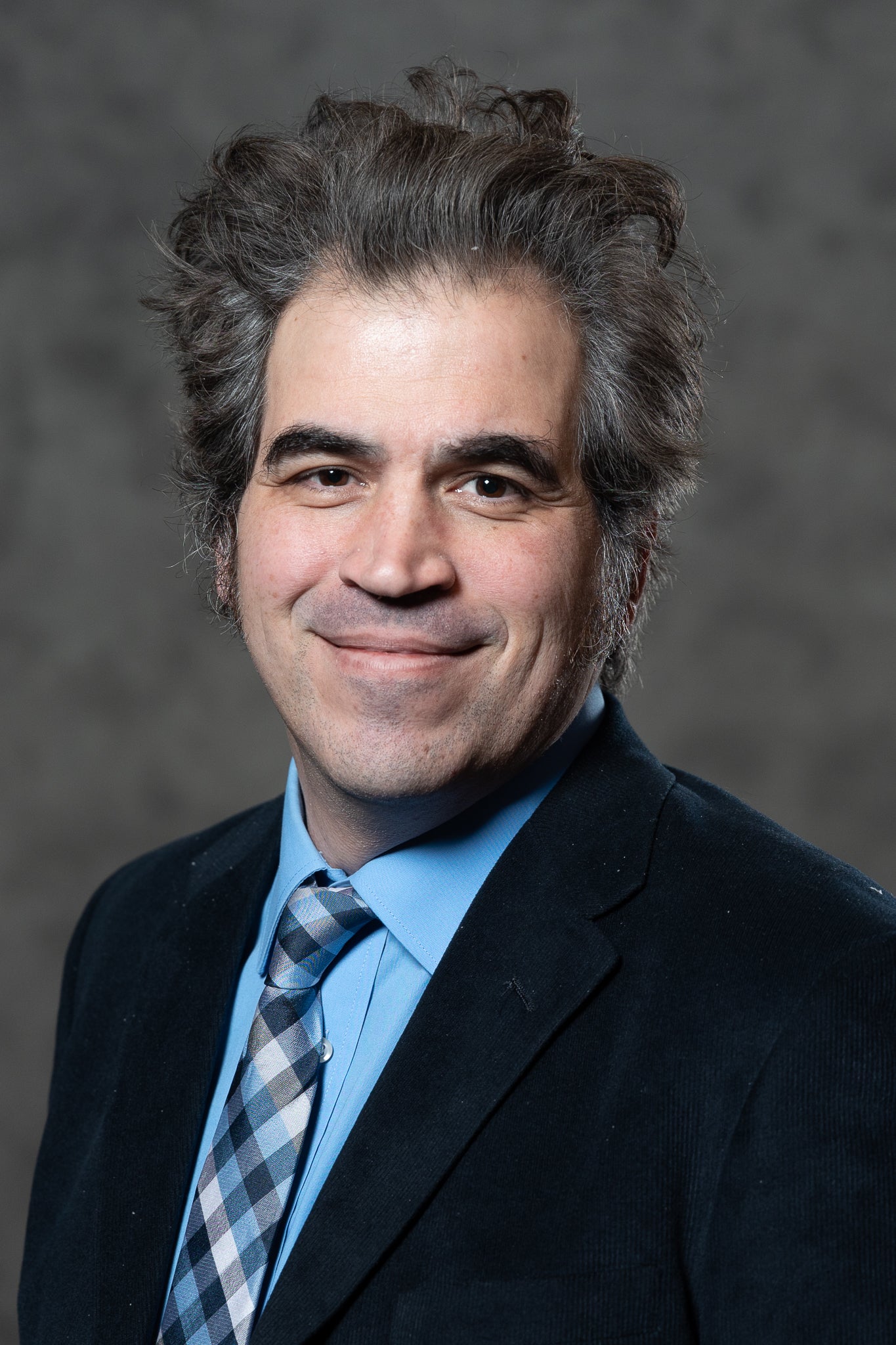
Michael Widom is a Professor of Physics at Carnegie Mellon University's Mellon College of Science, with a courtesy appointment as Professor of Materials Science & Engineering. His research spans condensed matter theory, focusing on novel materials in both condensed matter and biological physics settings.
Education:
- PhD in Physics, University of Chicago (1983)
- B.A. with honors in Physics, Cornell University (1980)
Professor Widom's research focuses on theoretical modeling of novel materials using methods of statistical mechanics, quantum mechanics, and computer simulation. His work addresses structure, stability, and properties of materials including liquid metals, metallic glasses, quasicrystals, and biomolecular structures. His research group employs first-principles total energy calculations coupled with statistical mechanics to model entire ensembles of probable structures.
Analysis of Professor Widom's recent publications (2023-2025) reveals a strong focus on high-entropy alloys, quasicrystals, and computational materials science. His work spans multiple disciplines including condensed matter physics, materials science, and biophysics, with particular emphasis on structure-property relationships in complex metallic systems. The research employs advanced computational techniques including first-principles calculations, molecular dynamics simulations, and machine learning approaches to understand thermodynamic properties and phase behavior.
Scientific Awards:
- Fellow, American Physical Society (1997)
- Fellow, American Association for the Advancement of Science (2008)
- Alfred P. Sloan Fellowship (1991)
- APDIC Best Paper Award (2005)
- W.R. Harper Fellowship (1983)
Professor Widom advises graduate students including Hassan Albuhairan and Abir Mahmud, and collaborates with visiting scientists such as Marek Mihalkovic from Slovakia. His research has been supported by various grants that enable computational studies of complex materials systems.
The Widom Research Group maintains several software tools for materials simulation including Wavetrans (for extracting electronic wavefunctions), MCMD (a hybrid Monte Carlo/molecular dynamics method), and an enthalpy database with formation enthalpies of many compounds. The group's research spans metal alloys (quasicrystals, metallic glasses) and biological physics (viral capsids, RNA structure).