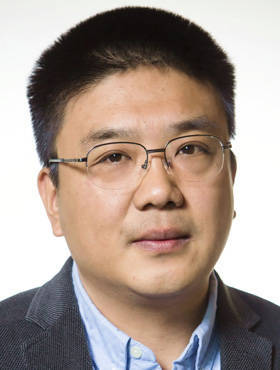
معرفی
Michael Shurin, MD, PhD is a Professor of Pathology and Division Director of Clinical Immunopathology at the University of Pittsburgh School of Medicine. His clinical expertise encompasses the evaluation of immunodiagnostic test results including ELISA, RIA, IF, electrophoresis, and Western blot tests for autoimmune, infectious, allergic, and immunoproliferative diseases. As a Diplomat of the American Board of Medical Laboratory Immunology, he brings specialized expertise to clinical immunopathology.
Dr. Shurin's research program focuses on the tumor microenvironment, particularly the role of myeloid regulatory cells in tumor-mediated immune suppression. His work investigates how the tumor microenvironment differentially controls the emergence of specific myeloid regulatory cell populations and how these can be redirected through molecular-targeted therapy to enhance antitumor immunity. He has also pioneered research on the neuroimmune axis in cancer, tumor innervation, and the effects of airborne nanomaterials on lung cancer development.
His extensive publication record includes approximately 176 publications spanning three decades, with recent work focusing on neuroimmune regulation of metastasis, Schwann cell biology in cancer, and myeloid-derived suppressor cells. Dr. Shurin has edited several influential books in the field, including 'The Tumor ImmunoEnvironment,' which has been among Springer's top 25% most downloaded eBooks in its category for multiple years.
- Diplomat, American Board of Medical Laboratory Immunology (ABMLI)
- Editor of four major academic books in immunology and cancer research
- Extensive publication record with over 170 peer-reviewed articles
- Research cited in numerous high-impact journals
Dr. Shurin's laboratory investigates the complex interactions between tumor cells and their microenvironment, with particular emphasis on myeloid regulatory cells and the emerging field of tumor innervation. His work bridges basic science and clinical applications, aiming to develop novel therapeutic approaches that target the tumor microenvironment to improve cancer immunotherapy outcomes.