معرفی
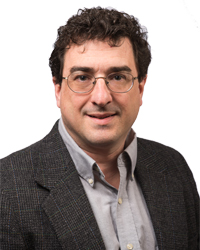
Michael S Landy is a Professor of Psychology and Neural Science at New York University, affiliated with the College of Arts & Science. He holds a Ph.D. in Computer and Communication Sciences from the University of Michigan (1981) and has been at NYU since 1981, progressing through academic ranks to full Professor in 1997. His research focuses on visual perception, action, and computational modeling, with key areas including sensory decision-making, multisensory integration, spatial vision, depth perception, and motor control. His lab explores how humans combine sensory cues (e.g., visual, tactile, auditory) under uncertainty and how these processes interact with neural mechanisms. Recent work addresses causal inference in multisensory perception, neural coding of motion signals, and Bayesian models of perception. He serves as director of the Landy Lab, advancing interdisciplinary research at the intersection of psychology, neuroscience, and computer science.
Education:
- Ph.D., Computer and Communication Sciences, University of Michigan (1981)
- M.S., Computer and Communication Sciences, University of Michigan (1976)
- B.S., Columbia University (1974)
Research Interests:
- Sensory Decision-Making: How humans set perceptual criteria and estimate confidence under uncertainty.
- Cue Integration: Optimal combination of visual, tactile, and auditory information (e.g., depth cues).
- Visual Action: Visually guided movements (e.g., eye/limb control under risk and cost constraints).
- Depth Perception: Neural and computational mechanisms for estimating 3D layout from binocular, motion, and pictorial cues.
- Neural Models: Linking psychophysics with neural responses in visual cortex (e.g., fMRI studies of texture and motion processing).
Lab & Collaborations: The Landy Lab conducts interdisciplinary research with collaborations in neuroscience, computer science, and mathematics. Current projects include studying causal inference in multisensory systems, neural mechanisms of motion perception, and Bayesian models of perception-action cycles.