معرفی
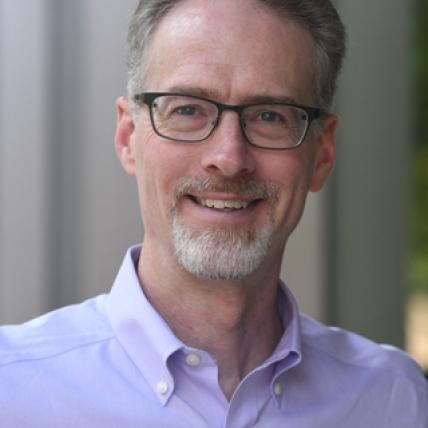
Michael O'Hear is a Professor of Law at Marquette Law School, Marquette University, where he has been a faculty member since 2000. He teaches Criminal Law and Criminal Process and is a nationally recognized expert in criminal punishment and sentencing.
Education:
- Yale College – Undergraduate Degree
- Yale Law School – Juris Doctor (JD), Editor-in-Chief, Yale Journal of Law & the Humanities, Editor, Yale Law Journal
Professor O'Hear's research focuses on criminal law, sentencing policy, judicial behavior, and criminal justice reform. His work critically examines the impact of sentencing guidelines, mandatory minimums, plea bargaining, and racial disparities in punishment. He has published extensively on how political, institutional, and procedural factors shape sentencing outcomes and mass incarceration.
His scholarly output includes over eighty articles, books, and book chapters. Key themes across his recent publications include judicial discretion, federalism in sentencing, rehabilitation, and the erosion of trial rights due to plea bargaining dominance. His work combines doctrinal legal analysis with empirical and policy-oriented approaches.
Scientific Awards and Honors:
- Robert W. Warren Public Service Award – Eastern District of Wisconsin Bar Association
- Elected Member – American Law Institute
Professor O'Hear has held significant academic leadership roles, including serving as the Law School's first Associate Dean for Research from 2008 to 2015. He has also contributed to public service as a member of the Milwaukee Fire and Police Commission (2010–2016). He is actively involved in professional legal communities, admitted to the Illinois and Wisconsin Bars, and a member of the American Law Institute.
He advises graduate and law students in criminal law and sentencing, though specific advisees are not listed. His research has been supported by institutional and scholarly grants, enabling extensive publication and policy engagement.
He is affiliated with legal research centers and contributes to national discourse on criminal justice reform through his writings, public service, and academic leadership.