معرفی
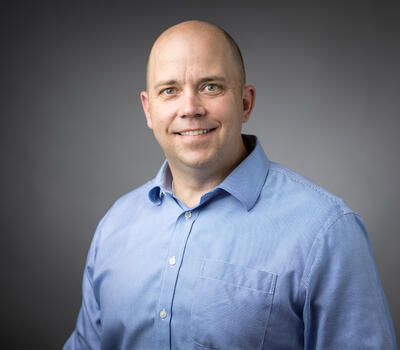
Michael McFarland is an Associate Professor in the Department of Civil and Environmental Engineering at Utah State University’s College of Engineering. His research and teaching focus on environmental sustainability, biosolids recycling, biological wastewater treatment, and bioremediation. He actively contributes to national environmental policy through advisory roles with the U.S. Environmental Protection Agency.
Educational Background:
- PhD in Biological Engineering, Cornell University (1987)
- MS in Chemical Engineering, Cornell University (1983)
- BS in Chemical Engineering, Yale University (1980)
His research interests span biological wastewater treatment, anaerobic digestion, biosolids land application, bioremediation of contaminated soils, and air quality monitoring. He has published extensively on modeling anaerobic digestion processes, electrocoagulation of industrial wastewater, and sustainable use of biosolids in agriculture and land restoration.
His recent publications reveal a strong focus on optimizing anaerobic co-digestion using models like ADM1, protecting groundwater from biosolids applications, and innovative treatment of industrial effluents. His work bridges engineering, environmental science, and policy, with practical applications in municipal and military environmental management.
Scientific Awards and Honors:
- Dr. Martin Luther King, Jr. Civil Rights Award (2014, NAACP)
- Engineering Educator of the Year – Great Basin Division (2008, SAME)
- Board Certified Environmental Engineer (1994, AAEES)
- Outstanding Engineering Teaching Award (2001, SAME Utah)
- Chairman, EPA Science Advisory Board’s Environmental Engineering Committee (2003)
Dr. McFarland has mentored several graduate students in civil and environmental engineering, particularly in biosolids and wastewater research. He has secured and led numerous research grants, especially from the U.S. EPA and U.S. Air Force, focusing on environmental compliance, pollution prevention, and emergency response. His work on digital opacity monitoring systems and hazardous air pollutant compliance reflects strong industry and government collaboration.
He has been actively involved in technical teams advising the U.S. EPA Science Advisory Board and has contributed to major reports on sustainability research, contaminated sediments, and pollution prevention. His lab and field research integrates biological, chemical, and systems engineering approaches to solve complex environmental problems.
حوزههای پژوهشی