معرفی
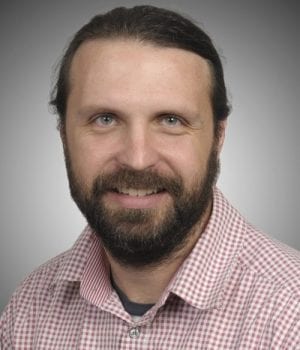
Professor Michael Gottfried is a leading researcher in physical chemistry at Philipps University of Marburg, Germany, where he heads the Physical Chemistry group within the Department of Chemistry. His research focuses on surface and interface science, particularly on-surface synthesis of carbon-based nanomaterials and energy-related applications. With over 100 publications, an h-index of 45, and more than 6200 citations, he has established himself as a prominent figure in his field.
His research interests span physical chemistry of energy materials, polymers, organic and organometallic thin films, surface and interface chemistry, model catalysis, on-surface synthesis techniques, X-ray absorption spectroscopy, scanning probe microscopies, and nanojoule calorimetry. His work particularly emphasizes the relationship between molecular topology and electronic properties at metal-organic interfaces, with applications in organic electronics and energy conversion.
Analysis of his recent publications reveals a strong focus on the synthesis and characterization of novel carbon nanostructures, including graphene nanoribbons, cyclic nanographenes, and non-benzenoid carbon allotropes. His research demonstrates sophisticated control over molecular assembly on surfaces, with particular attention to how molecular topology affects electronic properties and surface bonding. The work combines advanced experimental techniques with theoretical modeling to achieve atomic-level precision in nanomaterial fabrication.
- SCS Lectureship of the Swiss Chemical Society (2016)
- Chinese Academy of Sciences, International Partnership Award for Young Scientists (2014)
- Visiting Professorship of the Chinese Academy of Sciences (2012)
- Emmy-Noether Habilitation Prize of the University Erlangen-Nürnberg (2010)
- Travel fellowships of the Alexander von Humboldt Foundation (2005, 2009)
- Feodor-Lynen Fellowship of the Alexander von Humboldt Foundation (2004)
Professor Gottfried has supervised numerous PhD students who have gone on to successful careers in academia and industry. His research is supported by significant funding, including participation in the Collaborative Research Center SFB 1083 focused on internal interfaces. He actively collaborates with international research groups and has served on editorial boards and selection committees for major scientific organizations.
His laboratory maintains state-of-the-art equipment for surface science investigations, including photoelectron spectroscopy (XPS, UPS, HAXPES), X-ray absorption spectroscopy (NEXAFS, XANES), scanning tunneling microscopy (STM), and nanojoule adsorption calorimetry. The group is part of the Marburg Research Academy and collaborates extensively with synchrotron radiation facilities worldwide.