معرفی
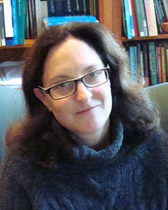
Michael B Gill serves as Professor of Philosophy at the School of Philosophy, Psychology and Language Sciences, University of Edinburgh. His distinguished career bridges historical and contemporary ethical inquiry, with primary expertise in 18th-century British moral philosophy and modern medical ethics. Gill maintains active engagement through regular publications, university teaching responsibilities, and public-facing academic discourse as evidenced by his personal website and recent scholarly output through 2025.
Gill's research program centers on two interconnected domains: the history of ethics (focusing on Shaftesbury, Hume, and their contemporaries) and contemporary bioethical dilemmas (particularly end-of-life care). Within historical ethics, he examines aesthetic theory, virtue concepts, and moral psychology in Enlightenment thought. His contemporary work analyzes physician-assisted suicide, withdrawal of life-sustaining treatment, and ethical implications of medical technology. Gill consistently challenges reductive frameworks through his development of sentimentalist pluralism, arguing against math-moral analogies while exploring how historical insights inform modern clinical ethics.
Analysis of Gill's recent publications reveals sustained scholarly productivity across both research streams. His 2021-2025 output shows deepening focus on Shaftesbury's aesthetics and moral psychology alongside urgent bioethical investigations into crisis standards of care, self-perceived burden, and unilateral treatment withdrawal. The 2023-2025 articles demonstrate particular responsiveness to contemporary healthcare challenges while maintaining rigorous historical grounding. Gill's theoretical contributions, especially his critique of moral rationalism and defense of pluralist frameworks, provide distinctive conceptual tools for navigating complex ethical landscapes.
No scientific awards, fellowships, or major honors are documented in the provided materials.
Information regarding graduate student supervision, doctoral committees, or research grant administration is not specified in the available text. Gill's academic profile emphasizes independent scholarship through books and sole-authored articles rather than collaborative team structures.
The materials contain no references to laboratory facilities, research centers, or formal research teams associated with Professor Gill. His scholarly activities appear centered in traditional humanities methodologies involving textual analysis and philosophical argumentation rather than laboratory-based or team-dependent research.