معرفی
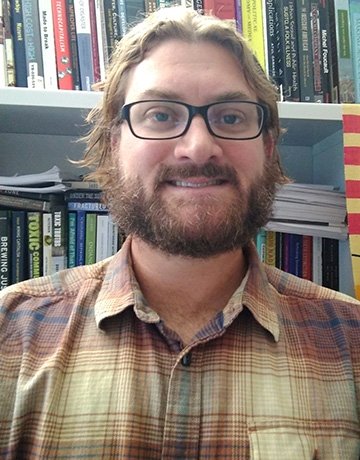
Michael Ash is Professor of Economics and Public Policy and Chair of the Department of Economics at the University of Massachusetts Amherst. He is affiliated with the School of Public Policy and co-directs the Corporate Toxics Information Project at the Political Economy Research Institute (PERI). His work bridges economics, public health, and environmental justice, with a strong focus on policy-relevant quantitative research.
Research Interests: His primary fields include environmental economics, labor economics, health economics, and public policy. He investigates environmental justice, greenhouse-gas policy, health disparities by race and class, labor unions in healthcare, and the economic impacts of public debt. His research often employs econometric and spatial analysis to uncover systemic inequalities.
The recent publications reflect a consistent focus on environmental inequality, public debt critique, and health disparities. Themes include critical replication in economics, corporate environmental performance, and the intersection of race, class, and environmental exposure. His work combines rigorous methodology with progressive policy implications.
Scientific Awards:
- Outstanding Accomplishment in Research Award, UMass-Amherst (2014)
- Most Important Economic Developments of 2013 (Bloomberg)
- Wonky Award (Washington Post, 2013)
- 2013 Albie for best political economy writing (Foreign Policy)
- Foreign Policy 100 Leading Global Thinkers of 2013
- College Outstanding Teaching Award (2011)
- Wayne F. Placek Award (2002)
Advising and Grants: Ash advised Ph.D. student Thomas Herndon, whose work on Reinhart-Rogoff became globally influential. He has been Principal Investigator or Co-PI on multiple grants from the National Science Foundation, NIH, U.S. Geological Survey, Massachusetts Society of Professors, and the American Psychological Foundation, totaling over $300,000 in funding. These projects address toxic exposure, health insurance equity, public higher education spending, and hospital labor conditions.
Labs and Teams: He co-directs the Corporate Toxics Information Project at PERI, which produces the Toxic 100 index. This team uses data transparency to hold corporations accountable for environmental harm and promotes environmental justice through research and public engagement.