معرفی
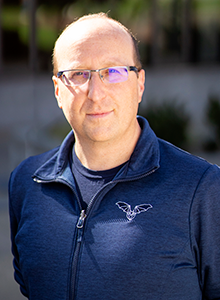
Melville Wohlgemuth, Ph.D., is an Assistant Professor in the Department of Neuroscience at the University of Arizona. His research focuses on sensorimotor control mechanisms in echolocating bats, examining how the brain integrates sensory inputs with behavioral goals across timescales. He employs multidisciplinary approaches including quantitative ethology, electrophysiology, optogenetics, and computational modeling.
Education and Career: Earned his Ph.D. from UCSF studying avian vocal control, followed by postdoctoral research at Johns Hopkins University on bat echolocation. His work bridges neurophysiology and natural behavior, with a focus on cortico-collicular circuits mediating spatial navigation and prey interception.
Research Interests:
- Sensory-driven motor adaptation in natural environments
- 3D auditory spatial processing in free-flying bats
- Neural mechanisms of behavioral planning and execution
- Echolocation as a model system for sensorimotor integration
Publications highlight contributions to understanding auditory localization, hippocampal spatial mapping, and midbrain circuit dynamics. His lab's work has implications for understanding general principles of neural control systems and adaptive behavior.
Labs/Teams: Directs the Wohlgemuth Lab, leveraging field and laboratory experiments to study natural sensorimotor processes in bats. Collaborates with engineers on biotelemetry systems like BatFlash for tracking echolocation behaviors.