معرفی
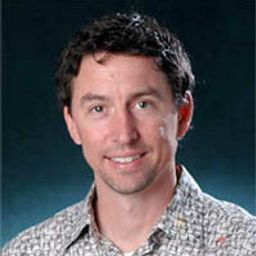
Maxwell Boykoff is a Professor and Director of the Environmental Studies Program at the University of Colorado Boulder, with adjunct affiliation in the Department of Geography. He is also a Senior Visiting Research Associate at the Environmental Change Institute, University of Oxford. His work bridges environmental science, communication, and policy, focusing on how climate issues are communicated across media, science, and political spheres.
- University: University of Colorado Boulder
- School: College of Arts and Sciences
- Department: Environmental Studies Program
- Adjunct Role: Department of Geography
- Visiting Role: University of Oxford, Environmental Change Institute
Maxwell Boykoff’s research centers on climate communication, science-policy interactions, and environmental governance. He explores how cultural politics, media narratives, and public engagement shape climate discourse. His work emphasizes creative and tailored communication strategies to overcome polarization and enhance public understanding. He has led initiatives such as the International Collective on Environment, Culture and Politics, mentoring students in interdisciplinary research. Boykoff advocates for a 'silver buckshot' approach—diverse, context-specific strategies—to improve climate engagement.
His recent publications reflect a strong trend in interdisciplinary climate communication, blending insights from social sciences, humanities, and policy studies. Themes include academic advocacy, media framing, audience segmentation, emotional engagement, and the role of arts and humor in climate discourse. His influential book Creative (Climate) Communications (2019) argues for innovative, audience-centered approaches to climate messaging.
Scientific awards and honors are not explicitly mentioned in the provided texts.
Boykoff actively mentors graduate and undergraduate students through research collectives and supervises postdoctoral scholars. While specific student names are not listed, his commitment to mentorship is emphasized. He has secured institutional support through roles at CIRES and interdisciplinary collaborations. He has not indicated part-time status and is actively involved in research, teaching, and leadership.
He is affiliated with the Cooperative Institute for Research in Environmental Sciences (CIRES) and previously directed the Center for Science and Technology Policy. His work involves transdisciplinary teams focused on science communication, climate adaptation, and policy engagement.