معرفی
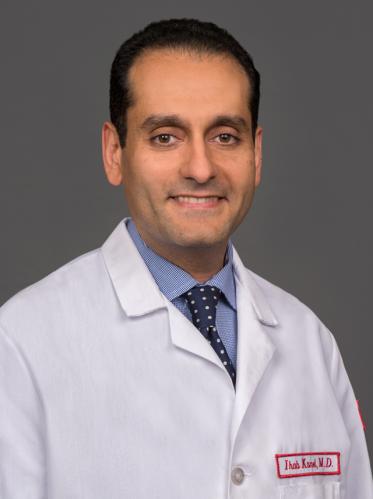
Max B. Kelz, MD, PhD serves as the Lee A. Fleisher, MD Professor of Anesthesiology and Critical Care at the Perelman School of Medicine, University of Pennsylvania, where he holds leadership roles including Vice Chair for Research, Director for Research Education, and Founding Director of the NEURRAL Center (Center for the Neuroscience of Unconsciousness and Reanimation Research Alliance).
Education:
- BS in Molecular Biophysics and Biochemistry, Yale University, 1993
- MS in Molecular Biophysics and Biochemistry, Yale University, 1993
- PhD in Neuroscience, Yale University, 1999
- MD in Medicine, Yale University, 2000
Research Focus: Dr. Kelz pioneers investigations into the molecular mechanisms of anesthetic action and neurobiology of sleep-wake regulation, employing mouse genetics and molecular biology to unravel how anesthetics induce unconsciousness. His lab discovered that anesthesia induction and emergence represent non-symmetrical state transitions, fundamentally challenging previous assumptions about brain state dynamics.
Publication Trends: Recent work (2023-2025) reveals three converging themes: (1) neural circuit mechanisms of anesthetic hypnosis (e.g., parafacial GABAergic neurons), (2) molecular interactions between anesthetics and cellular targets (e.g., mitochondrial effects of quinone analogs), and (3) clinical translation of biomarkers for consciousness recovery (e.g., posterior dominant rhythm in EEG). His research bridges basic neuroscience with clinical anesthesiology through innovative human, murine, and computational models.
Awards and Honors: None listed in source materials.
Advising and Funding: Mentored PhD candidate Andi Wasilczuk (dissertation: Reverse Engineering the Anesthetic State). Continuously NIH-funded for approximately two decades with 95+ peer-reviewed publications. Appointed President and Chief Scientific Officer of the Foundation for Anesthesia Education and Research (FAER) starting in 2024.
Labs and Collaborations: Leads the Kelz Lab and founded the NEURRAL Center, fostering interdisciplinary research on unconsciousness through the Center for the Neuroscience of Unconsciousness and Reanimation Research Alliance. His team integrates molecular, systems, and clinical neuroscience approaches across fruit fly, mouse, and human models.