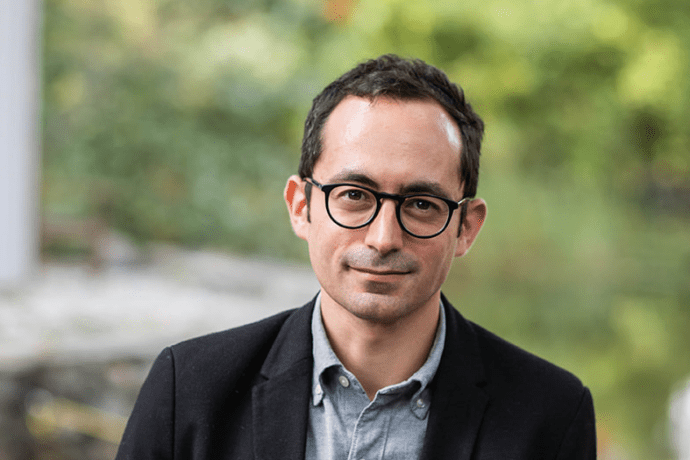
Maurice Lee
استاد · Nineteenth-Century American and British Literature and Culture
Boston Universityمعرفی
Maurice Lee serves as Professor and Director of Undergraduate Studies and Undergraduate Outreach within Boston University's College of Arts & Sciences. His scholarly work positions literature at the intersection of intellectual and cultural history, extending nineteenth-century frameworks to contemporary issues including racial politics, information overload, and science-art relationships.
His academic foundation includes a BA from Stanford University and a PhD from the University of California, Los Angeles.
Lee's research centers on Nineteenth-Century American and British Literature and Culture, with deep specialization in Print History, Information History, and Digital Humanities. He investigates how literature mediates rational systems and everyday life, particularly through Literature and Science and Literature and Philosophy lenses, while maintaining significant contributions to African American Literature. His methodology consistently bridges historical analysis with modern applications, especially regarding information ecosystems.
His publications demonstrate a cohesive trajectory examining how nineteenth-century information systems shaped literary forms and cultural attitudes, with increasing focus on digital humanities applications. This evolution reveals persistent engagement with probability theory, media technology, and racial discourse across historical periods.
His distinguished recognition includes:
- Radcliffe Institute for Advanced Studies Fellowship (2017-2018)
- Henderson Senior Research Fellowship (2014)
- Hariri Institute Grant in Digital Humanities (2013-2014)
- Choice Outstanding Academic Title (2012)
- Neu Teaching Award (2009)
- Charles A. Ryskamp/ACLS Research Fellowship (2009)
- NEH Research Fellowship (2007)
- James Gargano Prize (2003)
- NEH Summer Fellowship (2003)
- Hennig Cohen Prize (2001)
As academic administrator, Lee oversees undergraduate curriculum development and outreach initiatives while teaching diverse courses ranging from nineteenth-century literature surveys to advanced graduate seminars in African American literature. His research has secured substantial funding through multiple NEH fellowships, ACLS awards, and university grants supporting digital humanities innovation.
No dedicated research laboratories or structured teams are referenced in available materials, though his Hariri Institute Grant indicates digital humanities collaboration.