معرفی
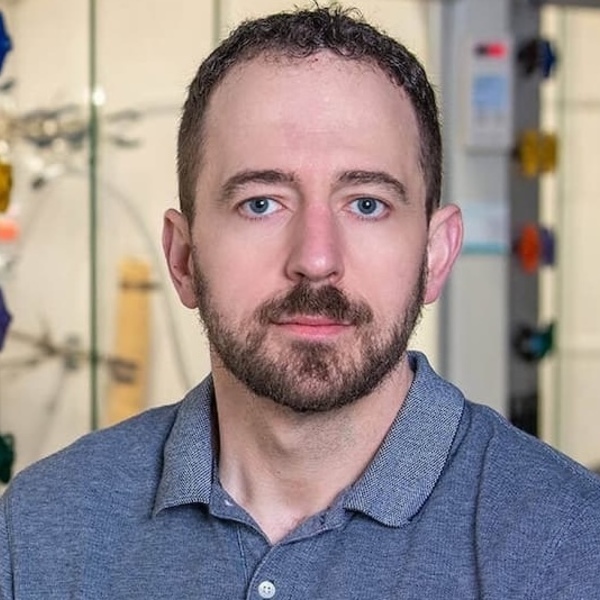
Matthew Webber is an Associate Professor in the Department of Chemical and Biomolecular Engineering at the University of Notre Dame’s College of Engineering. He leads the Webber Lab, an interdisciplinary research group focused on supramolecular biomaterials and smart drug delivery systems. His work integrates principles of supramolecular chemistry and molecular engineering to develop responsive materials for healthcare applications.
Education:
- Ph.D., Biomedical Engineering, Northwestern University, 2011
- M.S., Biomedical Engineering, Northwestern University, 2009
- B.S., Chemical Engineering, University of Notre Dame, 2006
Dr. Webber’s research focuses on supramolecular biomaterials, glucose-responsive drug delivery (especially for diabetes), bio-inspired materials, and dynamic hydrogels. His lab engineers modular, tunable materials using non-covalent and dynamic covalent interactions to create systems that respond to biological cues such as glucose levels or enzymatic activity. These innovations are applied to insulin and glucagon delivery, cancer immunotherapy, and diagnostic platforms.
The 15 most recent publications highlight a strong trend in developing intelligent, stimuli-responsive biomaterials. Key themes include glucose-responsive hydrogels, supramolecular peptide systems, host-guest chemistry, and applications in diabetes management and cancer immunotherapy. The work spans from fundamental mechanistic studies to translational therapeutic formulations.
Scientific Awards:
- Fellow of the American Institute for Medical and Biological Engineering (AIMBE)
- Senior Member of the National Academy of Inventors
- NSF CAREER Award (2020)
- NIH MIRA Award
Dr. Webber has secured major research funding, including the NSF CAREER and NIH MIRA awards, supporting his work on dissipative non-equilibrium hydrogels and supramolecular drug delivery. He actively mentors students and collaborates across institutions and with industry to translate innovations into real-world solutions. His lab emphasizes interdisciplinary collaboration and translational impact.
The Webber Lab develops advanced materials through molecular design, focusing on supramolecular interactions that enable dynamic, reconfigurable, and bioresponsive systems. The group leverages both synthetic and bio-inspired strategies to create next-generation therapeutics and diagnostics.