
معرفی
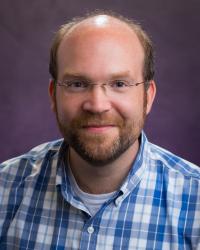
Matthew W. Mosca is an Associate Professor of History at the University of Washington, with a joint appointment in the Jackson School of International Studies. He holds the Dau-lin Hsu Endowed Professorship. His research focuses on Qing empire history, Inner Asian frontiers, and the historiography of the Mongol Empire within a Eurasian context. Mosca earned his Ph.D. in History and East Asian Languages from Harvard University in 2008, followed by fellowships at UC Berkeley and the University of Hong Kong. His work bridges Chinese imperial studies with global history, examining how Qing-era geographies and historiographies shaped modern geopolitical frameworks.
Education:
- Ph.D. (2008), Harvard University: History and East Asian Languages
- AM (2002), Harvard University: Regional Studies – East Asia
- BA (2000), University of British Columbia: Joint Honors in History and English
Research Interests: Mosca explores the Qing empire’s engagement with global systems, particularly its evolving conceptions of India, Inner Asia, and the Mongol legacy. His work emphasizes multilingual sources and cross-cultural exchanges, analyzing how Qing intellectuals navigated Eurasian networks. Recent projects include reinterpreting the historiography of Chinggis Khan and tracing Qing awareness of European and Ottoman empires.
Publications: His monograph From Frontier Policy to Foreign Policy (Stanford, 2013) redefined Qing geopolitical thought, while peer-reviewed articles in Asia Major and International History Review highlight his focus on imperial knowledge systems. He co-edits Saksaha: A Journal of Manchu Studies and serves on editorial boards for leading journals.
Awards & Grants:
- Mellon Fellowship for Assistant Professors (2013-2014)
- Elaine Mossmann Dissertation Prize (Harvard, 2008)
- Fulbright Fellowship (2005-2006)
Teaching & Service: Mosca teaches courses on Chinese civilization, Mongol empires, and global frontiers. He directs graduate studies in the History Department and advises on projects linking Manchu studies with digital humanities. His presentations span international venues, from Tübingen to the Collège de France.


