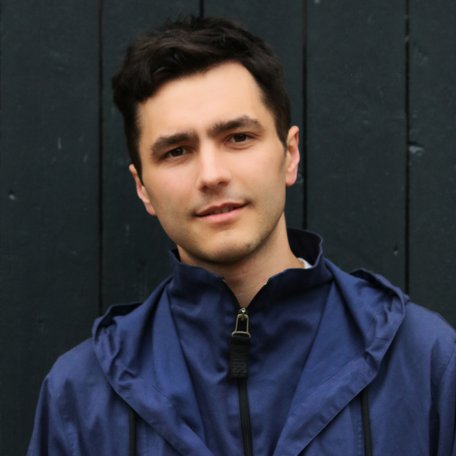
معرفی
Matteo Mastrandrea is an architect, set designer, and researcher currently serving as Design Director of Es Devlin Studio while pursuing his PhD at Cambridge University. At the Royal College of Art, he teaches Architectural Design Studio 4 (ADS4) within the School of Architecture alongside Tom Greenall and Nicola Koller, a position he has held since 2016.
His research focuses on performance and the role space plays in determining narrative modes, with particular emphasis on how staging practices from theater have infiltrated other creative domains like film. Mastrandrea challenges what he describes as an "abiding antitheatricalism in contemporary theory," arguing that spatial practices relevant to ecological collapse are consistently overlooked in architectural discourse. His PhD work examines how sets can render objects differently, creating new relations between subjects and things that often have profound ecological implications.
Analysis of Mastrandrea's publications reveals consistent exploration of spatial politics, ecological design, and the intersection of architecture with performance. His work spans theoretical investigations in journals like E-flux Architecture to practical applications in major exhibitions and performances. The recurring themes across his writings include sustainable material culture, memory and space, narrative architecture, and the political dimensions of scenography.
Mastrandrea's professional practice as a scenographer spans nearly a decade, with notable projects including Echo (Cirque du Soleil, 2023), The Weeknd Tour (2023), Super Bowl LVI Halftime Show (2022), The Lehman Trilogy (National Theatre), Conference of the Trees (COP26, 2021), and The Weeknd at Coachella (2018). His work crosses boundaries between art, opera, music, film, and technology, operating at scales from intimate sculptures to global events.
His teaching and research demonstrate commitment to exploring how spatial practices can address urgent social and political questions through materials, landscapes, history, culture, and climate change. While specific grant information isn't provided in the text, his extensive exhibition record and institutional collaborations suggest significant project funding. His work with major institutions like Tate Modern, Lincoln Center, and the Royal Opera House indicates substantial professional recognition.