معرفی
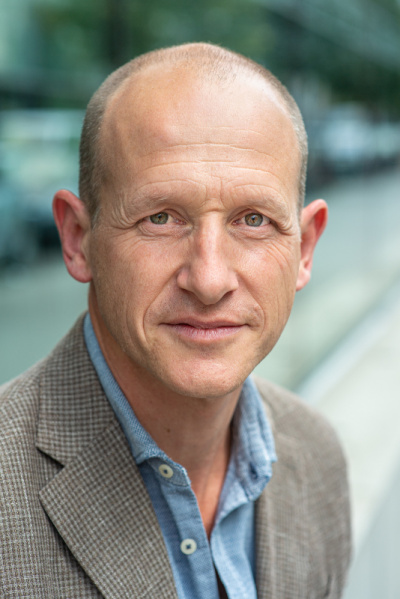
Dr. Martin Schlaepfer is a Senior Lecturer at the University of Geneva, where he conducts research and teaching in the fields of ecology, conservation biology, and human-environment interactions. His work bridges ecological science with societal values, focusing on biodiversity conservation, urban ecosystem services, and sustainability policy. He is actively involved in interdisciplinary research and policy collaboration, particularly through the GE-21 network.
Research Interests: Martin Schlaepfer's research spans conservation biology, urban ecology, and the societal dimensions of environmental protection. He investigates how societal values shape biodiversity goals, the role of non-native species in ecosystems, and the equitable distribution of urban green and blue spaces. His work emphasizes the integration of ecological data with social science to inform sustainable urban planning and climate resilience strategies.
The recent publications highlight a strong trend toward interdisciplinary environmental science, combining ecological modeling, policy analysis, and social equity considerations. His work frequently addresses urban sustainability, the valuation of biodiversity, and the science-policy interface, particularly in the context of IPBES and local governance in Geneva.
Scientific Awards:
- No awards explicitly mentioned in the provided text.
Advising and Grants: Dr. Schlaepfer has supervised Master’s students, including C. Demoneky and L.M. Bauchot, whose theses focused on urban green space accessibility and cultural ecosystem services. He has contributed to funded research projects such as NOS-ARBRES and climate resilience studies for the City of Lancy, often in collaboration with the canton of Geneva. His work involves partnerships with governmental and academic stakeholders to translate research into practical conservation and urban planning outcomes.
Labs and Teams: He co-founded the GE-21 group, a network of specialists dedicated to promoting biodiversity and ecosystem services in the Greater Geneva region. This team collaborates with local authorities to develop and test conservation strategies through real-world case studies, serving as a boundary organization between science and policy.