معرفی
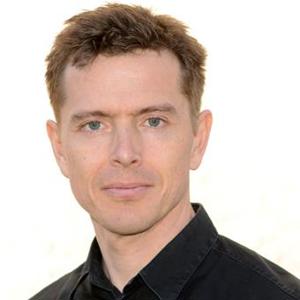
Martin Magnuson is a Senior Associate Professor at the Thin Film Physics Group, Department of Physics, Chemistry and Biology (IFM) at Linköping University. His research focuses on electronic structure and chemical bonding of materials using X-ray spectroscopy with synchrotron radiation and computational methods. He works on materials like MAX-phases, MXenes, amorphous carbides, and wide band-gap nitrides, with applications in hard coatings, electrical contacts, and energy technologies.
Research Interests: Magnuson’s work bridges application-inspired fundamental research and industrial relevance. Key areas include anisotropy in electronic structures, stochastic quenching density functional theory (SQ-DFT), and temperature-dependent orbital occupations in materials. His studies on strongly correlated systems like high-temperature superconductors and colossal magnetoresistance materials aim to enhance understanding of electron correlations and phase transitions.
Article Trends: Recent publications highlight advancements in MXene synthesis, proton conductor characterization, and thermoelectric materials. Themes include 2D ceramics, chemical exfoliation, and environmental interactions with materials. Collaborative work spans goldene, nitride alloys, and hydrothermal quartz analysis, often using X-ray absorption/emission and EXAFS/XANES techniques.
Scientific Awards:
- SEK 20 million grant from Swedish Energy Agency and Swedish Research Council (2023)
- STINT postdoctoral grant (1999-2001)
Advising and Grants: He has co-supervised Ph.D. students and served as an informal supervisor for undergraduates, Ph.D. students, Guest Researchers, and Post Docs. His research is funded by grants including a SEK 20 million award for energy research and contributions to MAX IV synchrotron facility development.
Labs and Teams: Magnuson collaborates with teams at Linköping University, Uppsala University, and international institutions. He is involved in MAX IV facility initiatives and MS2E strategic center (2006-2012) for surface engineering and nanotechnology. His work leverages synchrotron beamlines (e.g., Balder) and computational tools like Wien2k, CASTEP, and SIAM.