معرفی
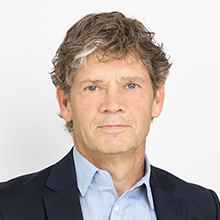
Professor Martin Koch is a distinguished academic at the Institute of Medical Engineering at the University of Lübeck, where he serves as Head of Magnetic Resonance Imaging. Born in Dinslaken, Germany in 1968, he completed his physics education at Göttingen University, including studies at the University of Edinburgh, followed by a PhD at the University of Leipzig. After over a decade as a Research Associate at University Medical Center Hamburg-Eppendorf, he joined the University of Lübeck in 2011 as a Juniorprofessor of Magnetic Resonance Imaging, achieving full professorship in November 2018.
His research focuses on advanced MRI techniques, particularly diffusion imaging methods that reveal microscopic neural structures. Koch has made significant contributions to double wave vector diffusion weighting techniques for compartment size estimation in tissue, with applications in neuroscience and clinical diagnostics. His work spans Magnetic Resonance Imaging, Diffusion Neuroscience, Functional Magnetic Resonance, Biochemical Engineering, Magnetic Particle Imaging, Nuclear Imaging, Image Computing, and X-Ray Based Imaging. Over the past two decades, his publications demonstrate consistent innovation in developing and validating advanced diffusion MRI techniques, with recent work expanding into magnetic particle imaging applications.
Analysis of his 15 most recent publications reveals a strong focus on technical innovations in diffusion MRI for neural tissue characterization, with increasing applications in interventional imaging and real-time monitoring. His research shows progression from fundamental diffusion physics to clinical applications, particularly in neurological conditions and cardiovascular imaging.
Professor Koch actively participates in academic governance as a Member of Promotionskolleg Schleswig-Holstein and the Zentraler Gleichstellungsausschuss. His laboratory focuses on developing novel imaging techniques that provide microscopic insights into tissue structure, with particular relevance to neurological disorders and stroke recovery monitoring.