
معرفی
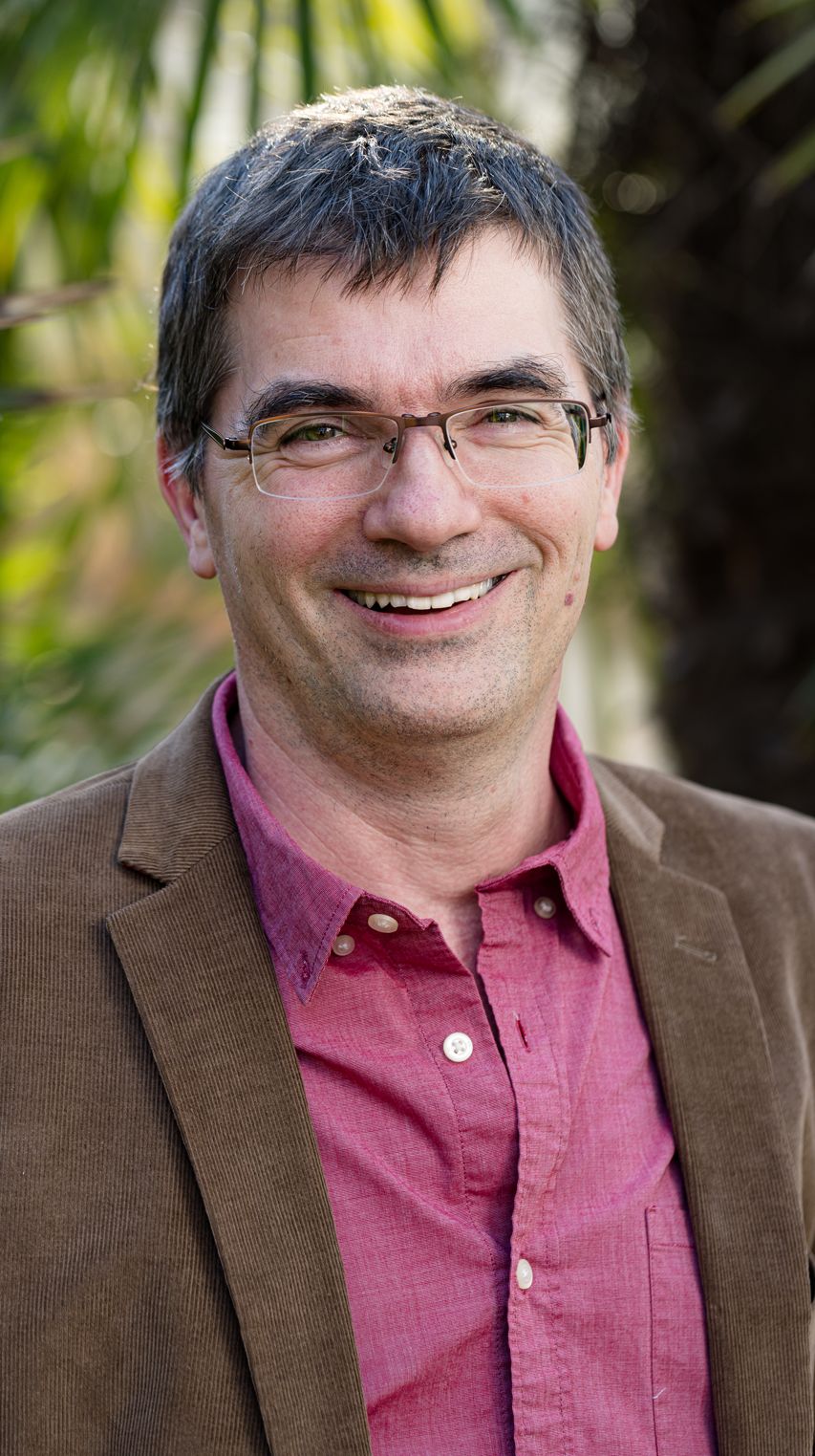
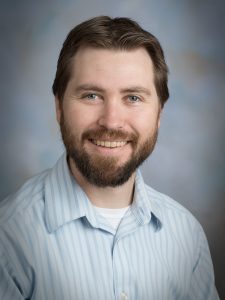
Martin Fischer is a Research Professor in the Department of Chemistry and Physics at Duke University, with a Faculty Network Membership at the Duke Institute for Brain Sciences. He directs the Advanced Light Imaging and Spectroscopy (ALIS) facility at Duke, where he leads cutting-edge research in nonlinear optical microscopy and its applications in biomedical imaging, nanomaterials characterization, and art conservation science.
Education:
- Ph.D., University of Texas, Austin (2001)
- M.A., University of Texas, Austin (1993)
Dr. Fischer's research focuses on developing novel nonlinear optical contrast mechanisms for molecular imaging. His work centers on ultrafast laser pulse shaping techniques that enhance measurement sensitivity for previously inaccessible molecular interactions. These methods enable non-invasive, high-resolution 3D imaging in highly scattering environments such as biological tissue. His research spans multiple disciplines, with significant applications in early melanoma detection, characterization of nanomaterials like graphene and gold nanoparticles, and non-destructive analysis of historic artwork. His innovative approaches have opened new pathways for both medical diagnostics and cultural heritage preservation.
Analysis of Dr. Fischer's recent publications reveals a strong focus on pump-probe microscopy applications across two primary domains: biomedical imaging (particularly for melanoma diagnosis) and art conservation science. His work demonstrates how nonlinear optical techniques can provide molecular-specific contrast without requiring exogenous labels. The publications show an increasing trend toward translational research, with several studies directly addressing clinical needs in cancer diagnosis and public health applications like face mask efficacy testing during the pandemic.
Scientific Awards:
- Optica Fellow, Optica (formerly Optical Society of America) - 2024
- Imaging Scientist Award, Chan Zuckerberg Initiative - 2019
- Outstanding Dissertation Award in Physics, The University of Texas at Austin - 2001
Dr. Fischer has secured substantial research funding through multiple competitive grants that support his work in both biomedical imaging and cultural heritage science. His current projects include developing next-generation microscopy techniques for early-stage metastatic melanoma detection (2024-2025), investigating missed metastases in early-stage melanomas (2023-2026), and advancing optical contrast methods for biological tissue and cultural heritage objects (2021-2024). His collaborative approach is evident in projects like the OP: Multimodal Molecular Spectroscopy and Imaging initiative (2016-2019) that bridged biomedical and art conservation applications.
As director of the Advanced Light Imaging and Spectroscopy (ALIS) facility, Dr. Fischer oversees a state-of-the-art research infrastructure that serves multiple departments at Duke University. The facility supports interdisciplinary research in nonlinear optics, with applications spanning physics, chemistry, biomedical engineering, and art conservation. His team collaborates with clinicians for melanoma research and with art conservation experts to develop non-invasive techniques for analyzing historic paintings.
Martin Fischer در سایتهای دیگر
جستوجوهای مرتبط
شاید اینها هم برایتان مناسب باشند
 Vladislav YakovlevTexas A&M University · استاد
 Francisco RoblesGeorgia Institute of Technology · استادیار
 Al FischerWestern Carolina University · استادیار
 Filippidis GeorgeFoundation for research and technology-hellas · پژوهشگر
 Jesse WilsonColorado State University · استادیار
 Gracie VargasThe University of Texas Medical Branch at Galveston · استاد