معرفی
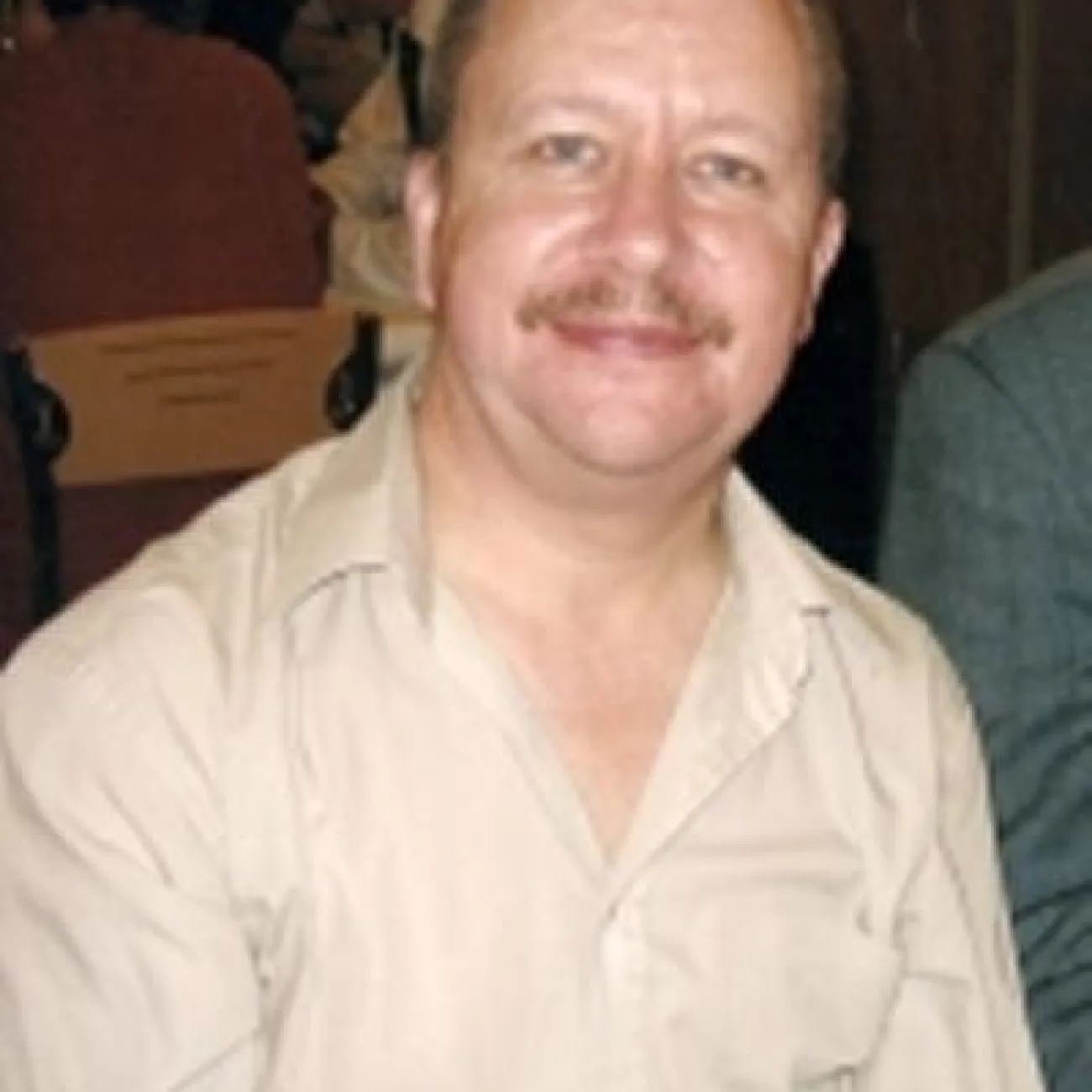
Mark Lawson is a Professor of Mathematics in the School of Mathematical & Computer Sciences at Heriot-Watt University, where he has been faculty since 2004 after serving as lecturer and senior lecturer at CPGC. His academic journey includes undergraduate and graduate studies at York University, a year reading Part III Mathematics at Sidney Sussex College, Cambridge, a DPhil, a Junior Research Fellowship at Lincoln College Oxford, and Royal Society-supported research at T.H. Darmstadt.
His educational background:
- Undergraduate & Graduate Studies: York University
- Part III Mathematics: Sidney Sussex College, Cambridge
- DPhil: York University (implied by academic trajectory)
Lawson's research centers on profound connections between semigroup theory, automata theory, and category theory, with current focus on partial symmetries, topological groupoids, and C*-algebras unified by non-commutative Stone duality. His work bridges abstract algebra and theoretical computer science, exploring algebraic structures through graph-theoretic and operator-algebraic frameworks. The fingerprint of his research reveals dominant themes in Monoids (100%), Inverse Semigroups (83%), Groupoids (71%), and duality (61%).
Recent publications demonstrate sustained innovation in generalizing algebraic structures, with 2024 outputs extending Thompson groups and free monoids through higher-rank graphs. His work consistently applies category theory to solve problems in semigroup theory while forging new links to K-theory and noncommutative geometry, reflecting an interdisciplinary approach that transcends traditional mathematical boundaries.
Scientific recognition:
- Mahony-Room-Neumann Prize (2017)
No public information is available regarding doctoral students, research grants, or laboratory affiliations in the provided materials. His advising activities and funded projects remain undocumented in the scraped content, though his 39 research outputs indicate substantial scholarly productivity. The absence of collaborative network details suggests limited public disclosure of team structures or ongoing research partnerships.