معرفی
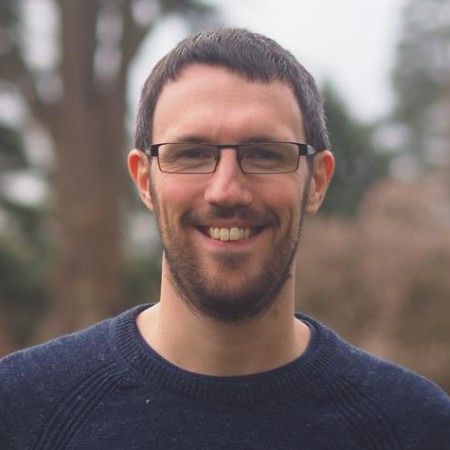
Professor Mark Broom is a Professor of Mathematics at City, University of London, part of City and St George's, University of London. He has held academic positions at the University of Sussex and the University of Glasgow, and served as Head of the Department of Mathematics at both Sussex (2007–2009) and City (2020–2024).
- Education:
- PhD in Mathematics, University of Sheffield (1993)
- MSc in Statistics, University of Sheffield (1990)
- BA (Hons) in Mathematics, University of Oxford (1989)
His research lies at the intersection of Mathematical Biology and Evolutionary Game Theory, focusing on modeling animal behavior, evolutionary stability, and population dynamics. Key areas include kleptoparasitism, signaling in prey species, multiplayer games, and structured populations. His work combines theoretical development with biological applications, often using game-theoretic models to explore ecological and evolutionary questions.
His recent publications reveal a strong trend in multiplayer evolutionary games on networks, analyzing cooperation, fixation probability, and movement dynamics. These studies frequently appear in top journals like Journal of Theoretical Biology, Dynamic Games and Applications, and Proceedings of the Royal Society A.
He is recognized for editorial and professional leadership:
- Editorial Board: Journal of Theoretical Biology, Dynamic Games and Applications, Theoretical Population Biology, Chapman and Hall Mathematical Biology Series
- Board Member: Society for Modeling and Theory in Population Biology (2024–present)
- Executive Board: International Society of Dynamic Games (2012–present)
- Fellow: Institute of Mathematics and its Applications (2022–present)
Professor Broom actively supervises PhD students and has authored or co-authored over 150 journal articles, multiple book chapters, and the influential book Game-Theoretical Models in Biology (2nd ed., 2023). He founded the Mathematical Models in Ecology and Evolution conference series, underscoring his role in shaping the field.
He is currently based in the Department of Mathematics within the College of Health, Science and Technology, continuing to lead research in mathematical biology and evolutionary dynamics.