معرفی
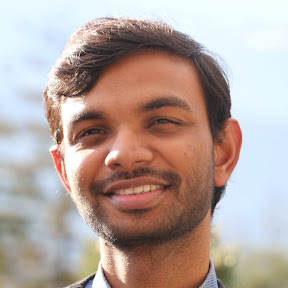
Mario Barbatti is a full Professor at Aix-Marseille University, affiliated with the Theoretical Chemistry Team. He also serves as a team leader at the Max Planck Institute for Kohlenforschung (2010–2015) and has held prestigious positions including Chair of Excellence A*Midex and recipient of the ERC Advanced Grant SubNano.
Education
- HDR, University of Vienna (2008)
- PhD, Federal University of Rio de Janeiro (2001)
Research Interests
Mario Barbatti’s research lies at the intersection of computational chemistry, quantum photophysics, and machine learning. He focuses on the development and application of theoretical methods to understand molecular excited electronic states, nonadiabatic dynamics, and photochemical processes. His work spans from fundamental quantum mechanics to applied simulations in materials science and biological systems.
Scientific Contributions and Trends
Barbatti’s recent publications demonstrate a strong focus on nonadiabatic surface hopping dynamics, machine learning-enhanced simulations, and photophysical mechanisms in organic molecules. He has contributed to the development of software platforms like Newton-X, COLUMBUS, and Legion, and has pioneered AI-driven tools such as MLatom and ULaMDyn for analyzing excited-state behavior. His work increasingly integrates quantum chemistry with AI to accelerate simulations and improve predictive accuracy.
Awards and Grants
- 2025 Faraday Horizon Prize (Royal Society of Chemistry)
- ERC Advanced Grant SubNano (2019–2024)
- FET Open Grant BootCrop (2019–2022)
- Chair of Excellence A*Midex (2015–2019)
Teaching and Mentorship
Barbatti teaches Mathematics, Quantum Mechanics, and Molecular Modeling. While no specific student names are listed, his leadership roles and prolific publication record suggest active mentoring of PhD and postdoctoral researchers.
Labs and Teams
He leads the Theoretical Chemistry Team (CT) at Aix-Marseille University and previously served as Team Leader at the Max Planck Institute for Kohlenforschung (2010–2015), fostering interdisciplinary collaboration in computational chemistry and photophysics.