معرفی
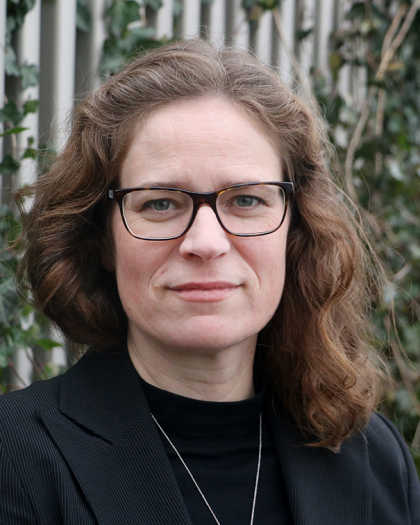
Maria Engberg is an Associate Professor/Senior Lecturer in Media Technology at Malmö University's Faculty of Technology and Society, Department of Computer Science and Media Technology. She also holds a concurrent position as Associate Professor in Digital Culture at the University of Bergen (2023-2027).
Her academic background includes a Ph.D. in English from Uppsala University (2007) with a dissertation on digital poetry. She has established herself as a prominent researcher at the intersection of digital humanities, media theory, and technology studies.
Professor Engberg's research focuses on the digitalisation of culture, with particular emphasis on immersive technologies, media aesthetics, and the social implications of emerging digital tools. Her recent work examines human agency in the adoption of generative AI within professional contexts, challenging deterministic narratives about technological change. She investigates how professionals in creative industries navigate the integration of new technologies into their daily work practices, revealing the complex micro-dynamics that shape digital transformation.
Her recent publications demonstrate consistent exploration of how digital technologies transform cultural practices and work environments. Key themes across her work include the relationship between technology and human agency, the sensory dimensions of digital experiences, and the creation of spaces for collective imagination about digital futures.
Professor Engberg has made significant institutional contributions, having directed Malmö University's Data Society research environment (2019-2024) and initiated the VIP program that now spans multiple faculties. Her research is supported through collaborations with the Digital Work Futures research environment, which examines how professionals lead and adapt to digitalization in the creative and digital industries.
She teaches across media technology programs, focusing on digital media topics, qualitative research methods, digital humanities, and media theory, bringing her research expertise directly into the classroom.