معرفی
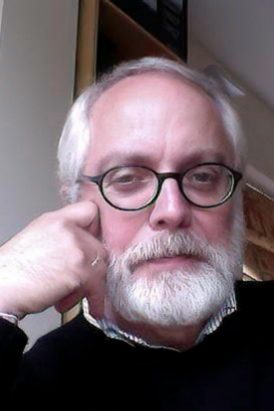
Margaret Graver serves as the Aaron Lawrence Professor in Classics at Dartmouth College, where she has been a faculty member since 1996. She specializes in Hellenistic and Roman philosophy with particular expertise in the philosophy of mind and emotion, Stoicism, and Latin literature including works by Seneca, Cicero, and Lucretius.
Her academic journey began with a B.A. from the University of North Carolina at Chapel Hill in 1982, followed by a Ph.D. from Brown University in 1996. Prior to joining Dartmouth, she taught briefly at Princeton University.
Professor Graver's research primarily focuses on ancient philosophical approaches to emotion, particularly Stoic theories of emotion and their applications. Her work bridges classical scholarship with contemporary philosophical and psychological interests, examining how ancient thinkers conceptualized the relationship between reason, emotion, and ethical living. She has made significant contributions to understanding Senecan philosophy and Ciceronian thought within their historical contexts.
Her publications demonstrate a consistent trajectory exploring how ancient philosophers, particularly the Stoics, conceptualized emotional experience and developed strategies for emotional regulation. Her work shows particular attention to the intersection of philosophical theory and practical application in ancient thought.
Professor Graver is an active participant in the academic community, regularly presenting at international conferences and institutions throughout the U.S. and Europe, including short-term appointments at French universities. She delivered the keynote address at Stoicon 2017 on the topic of dispassionate living.
She teaches a variety of courses at Dartmouth including CLST 10.03 Mind, Heart, Brain (Spring 2025), CLST 03 Reason and the Good Life: Socrates to Epictetus (Fall 2025), LAT 27 Mortality and Immortality in Roman Philosophy (Spring 2024), and LAT 31 The Italian Countryside. Her current work in progress examines Cicero's complex relationship to Stoic ethics throughout his career.