معرفی
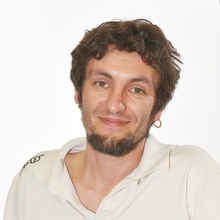
Marco Bortoluzzi is an Associate Professor in the Department of Molecular Sciences and Nanosystems at Ca' Foscari University of Venice. His primary roles include research in coordination and organometallic chemistry, teaching courses like Transition Metal Chemistry, and overseeing laboratory safety. He holds qualifications in General and Inorganic Chemistry (SSD CHEM-03/A) and has been a faculty member since 2007, advancing to his current rank in 2020.
Education: Graduated with a 5-year degree in Industrial Chemistry (cum laude) from Ca' Foscari in 2001, followed by a PhD in Chemical Sciences (2004). He completed postgraduate courses in language proficiency and academic lecturing, alongside specialized training in organometallic chemistry and NMR spectroscopy.
Research focuses on synthesizing and characterizing transition metal and f-block element complexes, with applications in optoelectronics and catalysis. He leads projects on luminescent materials, heterogeneous catalysis, and nanocluster chemistry, supported by grants like ISCRA and FFABR. Collaborations span international institutions, including Universities of Trieste, Udine, and Modena, and the Spanish AIMPLAS institute.
Publications: Over 190 articles in journals like Inorganic Chemistry, European Journal of Medicinal Chemistry, and Chemistry–A European Journal. Recent work emphasizes CO2 activation, anticancer metal complexes, and atomically precise nanoclusters. His research integrates experimental and computational methods to explore reactivity and electronic structure.
Awards: National Scientific Habilitation as Full Professor (2021) and Associate Professor (2017). Editorial roles include Associate Editor of Frontiers in Catalysis (2022–2023) and reviewer for major journals. He supervises PhD theses, chairs doctoral boards, and coordinates sustainability initiatives within the university.
Teaching: Courses include Transition Metal Chemistry, f-Block Elements, and Bioinorganic Chemistry. He advises over 40 theses, including international collaborations, and promotes innovative teaching methods in chemistry education.