معرفی
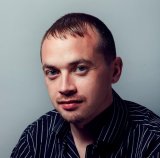
Dr. Marc Botha serves as Associate Professor in the Department of English Studies at Durham University with dual affiliation at the Institute of Hazard, Risk and Resilience. His interdisciplinary scholarship bridges literary theory, aesthetics, and cultural studies with a focus on contemporary crises of fragility, risk, and prediction. Appointed in 2016 after prior teaching at the University of Pretoria, he maintains active research collaborations across international networks including the Matiri University Consortium and University of Witwatersrand.
His educational trajectory includes an MA from the University of Pretoria followed by doctoral research at Durham University (2006-2011), where he completed his dissertation on Modernism and Literary Theory. This foundation supports his current investigations into conceptual intersections across media and temporalities.
Botha's research centers on three interwoven domains: fragility/vulnerability studies examining cultural artifacts from Scottish poetry gardens to Georgian icons; divination/futurity research analyzing prediction politics through Rob Halpern's poetry; and queer poetics exploring desire within necropolitical frameworks. His methodological toolkit combines deconstruction, object-oriented ontology, Badiou's event theory, and queer criticism applied primarily to American literature with global resonance.
His publication trajectory reveals consistent thematic evolution from minimalism studies (2017 monograph) toward risk/hazard scholarship, culminating in the 2021 'Future Theory' handbook co-edited with Patricia Waugh. Recent works demonstrate increasing interdisciplinary convergence between literary analysis and environmental/social dynamics, particularly through Leverhulme Trust-funded projects.
No scientific awards are documented in current institutional profiles. His supervisory activities include mentoring Paul Cockburn as Research Postgraduate while securing project funding through initiatives like the Leverhulme Trust Tipping Points collaboration. Administrative leadership encompassed co-directing Durham's Institute of Hazard, Risk and Resilience (2017-2020) and coordinating international risk/humanities workshops through the Matiri Network.
Current research collectives feature the Institute of Hazard, Risk and Resilience where he maintains affiliate status, and ongoing South African collaborations through his University of Witwatersrand Research Associate position established in 2016. These frameworks facilitate his cross-continental investigations into aesthetic responses to systemic fragility.