معرفی
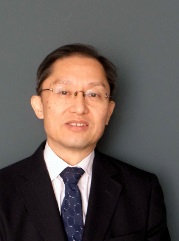
Mamoru Fujitsuka serves as Professor at the Department of Material Excitation Chemistry within SANKEN (The Institute of Scientific and Industrial Research), Osaka University, a position held since 2020 after progressing from Associate Professor (2003-2020). His career spans foundational roles at Tohoku University and Kyoto University, establishing him as a leading figure in photochemical research.
His educational foundation includes a Ph.D. from Kyoto University (1994), followed by a Japan Society for Promotion of Science Research Fellowship. Career milestones demonstrate continuous advancement in molecular excitation chemistry:
- 2020–present: Professor, SANKEN, Osaka University
- 2003–2020: Associate Professor, SANKEN, Osaka University
- 1996–2002: Research Associate, Tohoku University
- 1993–1996: JSPS Research Fellow, Kyoto University
Fujitsuka's research pioneers "Molecular excitation chemistry" through photo- and radiation-induced processes. Core investigations include:
- Multi-wavelength laser excitation dynamics of excited intermediates
- Nano-structured photocatalysts for photoenergy conversion
- Photo/radio-responsive nanomaterials for biological applications
- Single-molecule biomolecular analysis techniques
His publication analysis (2017-2023) reveals consistent focus on electron transfer mechanisms in excited states, particularly using femtosecond spectroscopy. Key trends demonstrate progression from fundamental radical ion dynamics (2017) to advanced applications in fullerene dianions (2023) and defect-engineered photocatalysts (2021), bridging photochemistry with nanomaterials for energy, environmental, and biological solutions.
No scientific awards are documented in available sources.
Fujitsuka actively recruits graduate talent through structured pathways:
- Research students (6-12 months)
- Master's candidates (2 years)
- Ph.D. doctoral students (3 years)
His laboratory at SANKEN employs ns/fs laser flash photolysis, pulse radiolysis, and microscopic methods to investigate excited-state reaction mechanisms. Current initiatives target photoenergy conversion systems, responsive nanomaterials for biological interfaces, and ultra-sensitive diagnostic platforms, maintaining Osaka University's leadership in excitation chemistry.