معرفی
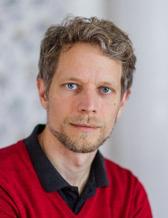
Magnus Wennerhag is a Professor of Sociology at Södertörn University's Department of Social Sciences, where he has worked since 2008. He defended his doctoral thesis at Lund University in 2008 on the global justice movement. Wennerhag serves as editor of the journal Sociological Research and contributes to the Swedish social theory journal Fronesis and the Labour Movement Research Network, while also serving on Arena idé's scientific council.
Wennerhag's research focuses on social movements, political protests, political sociology, climate protests, social stratification, political violence, and sociological theory. His work demonstrates a consistent interest in understanding collective action, protest dynamics, and social change processes. He has conducted extensive comparative research across European countries, particularly examining Pride parades, climate activism, and radical left movements.
His recent publications reveal evolving research interests toward climate protests and the intersection of social class with environmental movements. Wennerhag's scholarly output shows a methodological diversity including questionnaire surveys, interviews with activists, and media analysis. His work frequently employs comparative frameworks, examining social phenomena across multiple European contexts.
Wennerhag currently leads the research project 'The Necessary and the Possible: How Social Movements Formulate, Convey and Negotiate Visions of a Fossil-Free and Just Future' (funded by Formas, 2019-2023). His previous projects include studies on anarchists in Eastern and Western Europe, radicalization and counter-radicalization, anti-racist contentions in the Baltic Sea region, and Europeanization of Swedish civil society organizations.
As an educator, Wennerhag teaches classical and modern sociological theory as well as social stratification. His editorial work with Sociological Research and Fronesis demonstrates his commitment to advancing sociological discourse in Sweden and internationally. His research collaborations span numerous European countries, reflecting his transnational approach to studying social movements and political participation.