معرفی
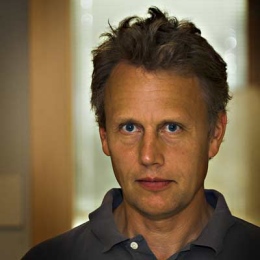
Magnus Enquist is a Professor in the Department of Zoology at Stockholm University, associated with the Centre for Cultural Evolution. His work bridges evolutionary biology and cultural evolution, focusing on human behavior, cumulative culture, and mathematical modeling of social processes. He transitioned from studying animal behavior (1979–2001) to human cultural evolution post-2001, co-managing an interdisciplinary project on cultural evolution (2001–2006) and founding the Stockholm University Centre for Cultural Evolution (2007–2022 as director). His research explores cultural evolution theories, human evolutionary transitions, and differences between human and non-human cognition.
Key interests include the role of sequential memory in human uniqueness, mathematical models of cultural processes, and the evolution of cumulative culture. His recent work includes the book The Human Evolutionary Transition: From Animal Intelligence to Culture (2023), emphasizing cognitive leaps distinguishing humans from other species. Enquist's publications span cultural transmission, learning mechanisms, and interdisciplinary approaches merging psychology, biology, and sociology.
Publications highlight studies on stimulus sequence discrimination in animals, cultural systems modeling, and the refinement paradox in cumulative culture. His work underscores the importance of conservatism and persuasion in cultural evolution, alongside computational tools like the Learning Simulator for simulating learning processes. Enquist's contributions advance understanding of how cultural systems develop, adapt, and drive societal change.