معرفی
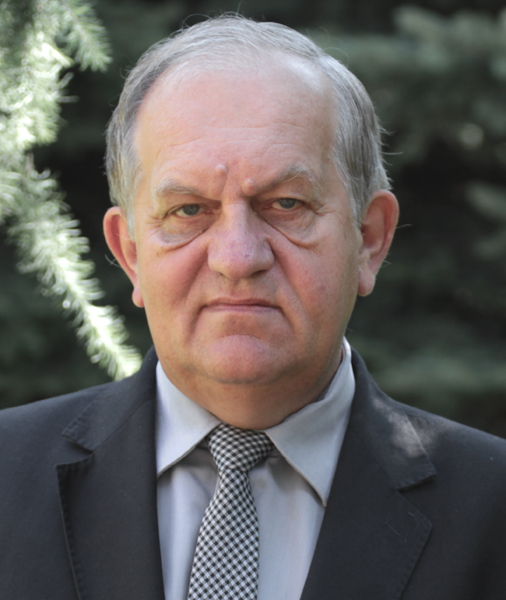
Luna Pellegri serves as an Associate Professor in the School of Physics at the University of the Witwatersrand. Holding a PhD from Milan University, she maintains an active research program in experimental nuclear physics with particular expertise in gamma-ray spectroscopy and nuclear structure studies. Her work is supported by international collaborations including the AGATA (Advanced Gamma Tracking Array) project and CLYC scintillator development initiatives.
Professor Pellegri's research focuses on nuclear resonance phenomena, with significant contributions to understanding giant dipole resonances, pygmy dipole resonances, and alpha clustering in atomic nuclei. Her experimental approach frequently employs inelastic scattering techniques using oxygen-17 beams to probe nuclear structure in isotopes ranging from light nuclei like oxygen-16 to heavier systems such as tin-124 and cerium-140. She has made important contributions to characterizing nuclear deformation effects across isotopic chains and investigating isospin mixing phenomena.
Analysis of her 15 most recent publications (2016-2018) reveals consistent research activity across three main domains: nuclear resonance studies (accounting for approximately 60% of output), detector development (25%), and nuclear structure investigations (15%). Her work demonstrates strong international collaboration patterns with researchers across Europe and South Africa, frequently published in Physical Review C and Nuclear Instruments and Methods journals.
Professor Pellegri's instrumentation expertise is particularly notable in gamma-ray detection systems. She has contributed significantly to the development and characterization of advanced scintillator technologies including LaBr3:Ce detectors, CLYC scintillators for neutron-gamma discrimination, and the CAKE coincidence array for the K600 spectrometer. Her technical publications address critical challenges in radiation detection including signal saturation correction, alpha-gamma pulse shape discrimination, and high-energy gamma-ray measurement techniques.
Within the AGATA collaboration, Professor Pellegri has focused on high-spin structure studies, isomer investigations, and gamma decay properties of excited nuclear states. Her group has made important contributions to understanding the order-to-chaos transition in tungsten-174 and high-lying states in lead-208, leveraging the advanced tracking capabilities of the AGATA demonstrator system.