معرفی
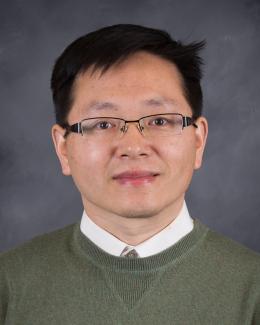
Luke Heroux serves as the Labs and Soft Matter Group Leader within the Neutron Sciences Directorate at Oak Ridge National Laboratory (ORNL), where he oversees laboratory operations, sample management, and soft matter environments for neutron scattering research. He joined ORNL in 2005 as a Scientific Associate and has led the construction, commissioning, and operation of major instruments including POWGEN, CORELLI, USANS, and Bio-SANS, while driving facility improvements in sample tracking and instrumentation.
His educational background includes a PhD in Material Science and Engineering from the University of Tennessee, Knoxville, completed in 2021. This advanced training underpins his expertise in structural analysis of soft matter systems.
Dr. Heroux's research centers on electron transport mechanisms in soft matter, with specific focus on conjugated polymers, deep eutectic solvents, and microemulsion systems. His work leverages neutron scattering techniques to probe molecular-level dynamics, directly addressing challenges in energy storage materials. Recent investigations examine segmental constraints in solid-state batteries and binding interactions in electrode slurries, revealing critical structure-property relationships.
Analysis of his 15 most recent publications (2011-2023) shows a dominant focus on battery materials (73% of works), particularly silicon anodes and polymer electrolytes, with neutron scattering as the primary characterization method (60% of studies). Key trends include mechanistic studies of slurry processing dynamics, morphology control in conductive polymers, and instrument development for advanced material characterization.
No scientific awards were documented in the source materials. Information regarding student advising or grant funding was not provided in the available texts.
As Group Leader, Heroux directs the Labs and Soft Matter team responsible for maintaining specialized sample environments and operational safety protocols. His group supports neutron scattering experiments through instrument development (notably Bio-SANS for biological materials) and facility upgrades, enabling cutting-edge research in soft matter physics and energy materials at one of the world's premier neutron science facilities.