معرفی
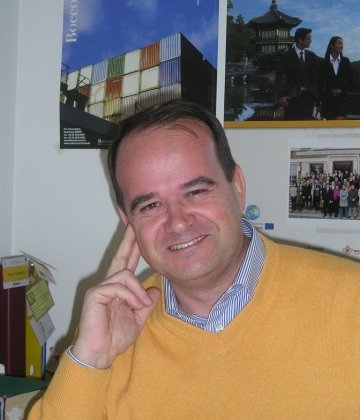
Luigi Mundula is an Associate Professor of Geography at the University for Foreigners of Perugia, where he serves as president of the “Made in Italy, Food and Hospitality - MICO” degree program. He is also a Research Fellow at the Tor Vergata Economics Foundation and CIREM (University of Cagliari), and a member of the Scientific Committee of the Foundation for Digital Sustainability. He founded and directs the Tomorrow's Cities Lab and the International Smart Cities School, and coordinates the Smart Cities Observatory (Italian Geographical Society and Roma Capitale).
His research focuses on sustainable development, urban and territorial innovation, smart cities, and the intersection of food, tourism, and geography. Key areas include Agriculture 4.0, digital geography, peri-urban development, and governance of agricultural parks. His work bridges engineering, economics, and geography, emphasizing innovation in territorial planning and policy.
His recent publications explore trends in smart city metrics, urban accessibility through marinas, the role of agricultural parks in tourism, and the implications of digital agriculture. These works reflect a strong interdisciplinary focus on sustainability, technology integration, and regional development.
- The measurement of smart cities and the objectives of the EU 2020 strategy: a critical reflection (2019)
- Between Urban and Rural: Is Agricultural Parks a Governance Tool for Developing Tourism in the Periurban Areas? (2021)
- Urban and Territorial Accessibility. A New Role for the Marinas (2021)
- Agriculture 4.0. Lights and shadows of a current future (2022)
Luigi Mundula actively mentors academic initiatives and leads multiple research platforms. He has taught extensively in programs related to sustainability, digital humanities, and Italian culture, supervising courses in Digital Geography, Tourism Geography, and Food Geography. He has not received any explicitly mentioned scientific awards. His research is supported through institutional affiliations and collaborative networks rather than individual grants detailed in the text.
He leads the Tomorrow's Cities Lab, which focuses on smart urban development, and directs the International Smart Cities School, promoting education and innovation in urban planning. These platforms serve as hubs for interdisciplinary research on sustainable and technologically advanced urban environments.