معرفی
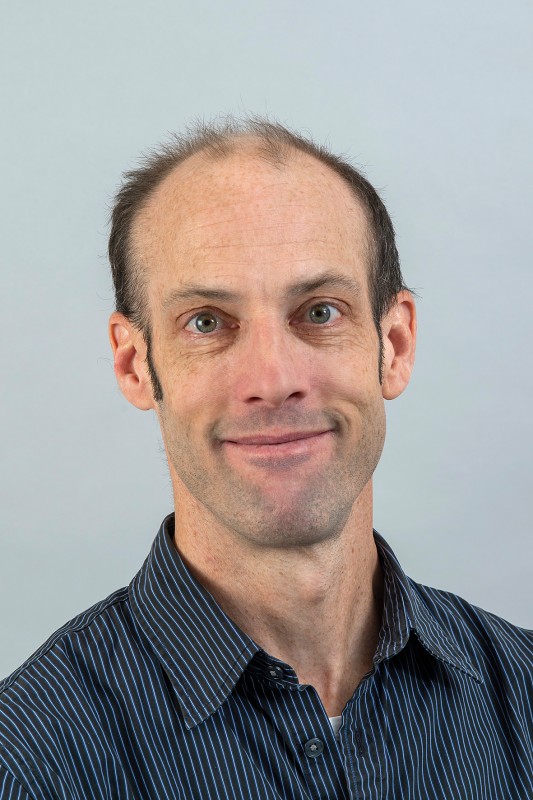
Luca Troise is a Senior Researcher in the Department of Physics at the Technical University of Denmark (DTU), specializing in quantum physics with a focus on Magnetic Resonance, Quantum Physics and Information Technology. His work contributes to UN Sustainable Development Goals through advanced quantum sensing applications.
His research interests center on quantum sensing using diamond NV centers for biological applications. Troise's work spans biomagnetic activity detection in neural and muscular systems, quantum magnetometry, and high-spatial resolution imaging. His fingerprint reveals expertise in Diamond Engineering (100%), Magnetic Field Physics (100%), Spatial Resolution Engineering (31%), and related fields including Biosensor Engineering and Biological Systems.
Analysis of his recent publications (2022-2023) shows a clear trend toward applying quantum sensing technologies to neuroscience and biomedical problems. His work bridges quantum physics with practical biological applications, particularly in measuring neuronal electrical activity and muscle function using diamond-based quantum sensors operating at room temperature with high spatial resolution.
Troise serves as a supervisor for PhD student Amzare, S. N. in the active project Intracellular Quantum Sensing using diamond with NV centers (2023-2026). Previously, he completed his own PhD on Highly sensitive quantum magnetometry using Nitrogen-Vacancy centers in diamond (2018-2022), where he was supervised by Andersen, U. L. and Berg-Sørensen, K. His research has gained significant attention, with multiple publications picked up by news outlets and widely shared on social media platforms.
His laboratory work focuses on developing diamond quantum sensors for biomagnetic applications, with particular emphasis on intracellular quantum sensing and high-sensitivity magnetometry at room temperature. The research team appears to collaborate extensively with experts in neuroscience, as evidenced by co-authors specializing in neural circuits, action potentials, and neuromuscular function.