معرفی
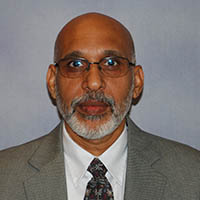
Luca Ridolfi is a Full Professor in the Department of Environmental, Land and Infrastructure Engineering (DIATI) at the Polytechnic University of Turin. He is a member of the Interdepartmental Center PolitoBIOMed Lab and serves as Scientific Advisor for the Partnership Agreement with SMAT (Società Metropolitana Acque Torino). His academic and research profile spans civil, environmental, and biomedical engineering domains.
His research interests include Computational Hemodynamics, Fluid Mechanics, Hydrology, River Ecology, Smart Cities, and Socio-hydrology. These are supported by expertise in hydraulics, environmental modeling, and sustainability sciences. His work aligns with key Sustainable Development Goals (SDGs), particularly Good Health and Well-being (Goal 3), Clean Water and Sanitation (Goal 6), Sustainable Cities (Goal 11), and Climate Action (Goal 13).
The recent publications highlight a strong trend in multiscale modeling, combining fluid dynamics with biomedical and environmental applications. Topics include cardiovascular responses to gravity, urban drainage resilience, river morphodynamics, and glaucoma pathophysiology. The work integrates numerical simulation, laboratory experiments, and real-world data, demonstrating a cross-disciplinary approach spanning civil, aerospace, and biomedical engineering.
He is actively involved in numerous research projects funded by competitive calls, including EU Horizon programs, PRIN, and PNRR. These projects cover sediment transport in rivers (SEDMORNET), agricultural water technologies (AGRITECH), carbon cycle modeling (CONCERTO), and urban water systems. He also leads commercial research contracts with public utilities like SMAT, focusing on hydraulic modeling and water quality assessment.
Luca Ridolfi supervises a large cohort of PhD students across multiple programs, including Civil and Environmental Engineering, Aerospace Engineering, and Bioengineering. His advisees work on topics such as hydrological modeling, fluid turbulence, cardiovascular flows, and sustainability in agri-food systems. He teaches core courses in Fluid Mechanics, Hydraulics, and Water Resources Planning at both undergraduate and graduate levels, and is a member of several doctoral college committees.
He is affiliated with key research groups such as the WaterToFood group and the PolitoBIOMed Lab, where he contributes to interdisciplinary efforts in environmental and biomedical engineering. His lab work involves both computational modeling and experimental validation, particularly in fluid dynamics and urban water systems.