معرفی
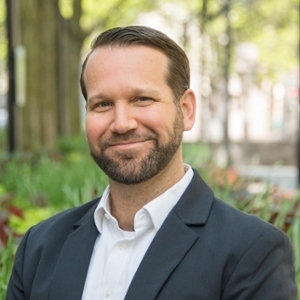
Louis P. Nelson is Professor of Architectural History and the Vice Provost for Academic Outreach at the University of Virginia. He specializes in the built environments of the early modern Atlantic world, with significant contributions to understanding American South, Caribbean, and West African architecture.
His research focuses on spaces of enslavement across the Atlantic world, examining how architecture shaped the trans-Atlantic slave trade and the experiences of enslaved people. Nelson has directed the Falmouth Field School in Jamaica for over a decade, documenting Caribbean architecture, and currently leads efforts to understand the University of Virginia as a landscape of slavery.
Nelson's scholarly work reveals trends in architectural history that connect material evidence with social and political contexts. His publications demonstrate expertise in vernacular architecture, sacred spaces, and the architectural manifestations of power and empire, particularly in colonial contexts.
- 2017 John Brickerhoff Jackson Prize
- 2017 Abbott Lowell Cummings Prize
- 2010 SESAH Best Book of the Year Prize
- 2008 SESAH Best Article of the Year
- 2015 Bishir Prize for Excellence in Vernacular Architecture
- University-wide Teaching Award (2007)
Nelson has secured significant research funding including a $5M Andrew Mellon Foundation grant for 'Race, Place and Equity' and another Mellon grant for 'Recovering Erased Histories.' His fieldwork with over 100 students through the Falmouth Field School has produced systematic documentation of eighteenth and nineteenth-century Caribbean architecture. He has been instrumental in the Memorial to Enslaved Laborers project at UVA, co-editing related publications and developing educational resources.
Nelson directs research initiatives including the Falmouth Project, a GIS-based data repository for Caribbean architectural history, and collaborates internationally with institutions like the House of the Slaves in Senegal. His work bridges academic research with public history through walking tours, films, and community engagement projects that interpret how racism is inscribed in the landscape.