معرفی
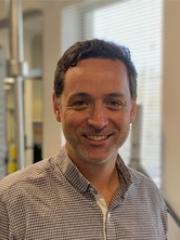
Logan Wade is a Research Fellow in the Department for Health at the University of Bath, actively contributing to research in biomechanics and human movement science. He holds a PhD in Biomechanics from the University of Queensland and is currently accepting doctoral students.
- Institution: University of Bath
- Department: Department for Health
- Academic Rank: Research Fellow
Education:
- Doctor of Philosophy (PhD) in Biomechanics, University of Queensland, awarded on 29 March 2019. Thesis: 'The influence of intrinsic and structural muscle properties on movement coordination during altered task constraints'.
Research Interests: Logan's research centers on human movement coordination, focusing on how intrinsic and structural muscle properties affect movement in both healthy and clinical populations. His current work investigates movement in individuals with ankylosing spondylitis, osteoarthritis, and amputees. He is also involved in interdisciplinary collaborations with computer science to develop marker-less motion capture systems for clinical and sports applications. These systems integrate video, motion capture, and force plate data to improve biomechanical analysis.
Publication Trends: His recent publications (2024–2025) reflect a strong focus on clinical biomechanics, sports performance, and technological innovation in movement analysis. Key themes include knee osteoarthritis, pose estimation, exoskeletons, and validation of marker-less systems. His work frequently appears in journals such as Clinical Biomechanics, Scandinavian Journal of Medicine and Science in Sports, and Royal Society Open Science, demonstrating interdisciplinary impact.
Scientific Contributions:
- Contributor to the BioCV Motion Capture Dataset (2024), a synchronized dataset for validating markerless human movement analysis.
- Researcher on the EPSRC-funded project 'Exploring Immersive Support for People Affected by Phantom Limb Pain' (2020–2021).
Supervision and Collaboration: Logan supervises doctoral students and collaborates extensively with researchers in biomechanics, computer science, and clinical rehabilitation. His network includes experts in motion analysis, neuromuscular control, and assistive technologies. He is actively engaged in interdisciplinary research that bridges engineering, health sciences, and computer vision to advance human movement understanding and rehabilitation.