معرفی
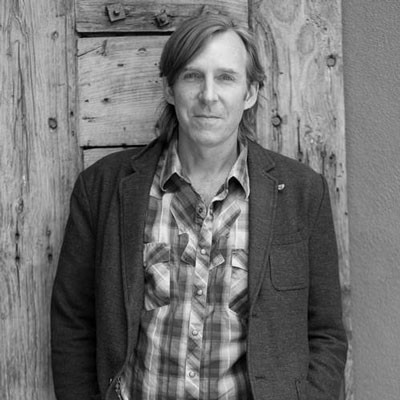
Lewis Borck is an Assistant Professor and Horizon Endowed Chair of Native American History and Culture at the University of Oklahoma's Dodge Family College of Arts and Sciences, Department of Native American Studies. He holds a PhD in Anthropology with a focus on Archaeology and a minor in Remote Sensing and Spatial Analysis from the University of Arizona.
- Education: AA in Liberal Arts (Madison Area Technical College), BA in Anthropology with Archaeology specialization and minor in Psychology (University of New Mexico), MA and PhD in Anthropology with Archaeology specialization (University of Arizona).
Borck employs quantitative spatial and network approaches to analyze material histories of past peoples, interpreting findings through Indigenous descendant histories and philosophies. His research specializes in Ancestral Pueblo and O'odham archaeology, Indigenous revolutions, social movements, and the influence of modern global politics on historical narratives. He challenges conventional interpretations of 'Western Civilization' in the deep past and advocates for community-based knowledge production.
His funded projects include collaborations with the Jicarilla Apache Nation's Tribal Historic Preservation Office, supported by the National Science Foundation, Wenner-Gren Foundation, National Park Service, and Institute for Field Research. He utilizes digital storytelling and public engagement to communicate research, with publications in journals like Journal of Island and Coastal Archaeology and The SAA Archaeological Record, as well as periodicals such as Yes! Magazine and The Conversation.
- Honors: Editorial Board member of American Antiquity, Committee on Native American Relations (Society for American Archaeology), President/co-founder of The History Underground, Co-founder of Black Trowel Collective Microgrants Committee.
Borck actively integrates storytelling into pedagogy and research communication. He has held positions at the University of Arizona, Universiteit Leiden, and the University of Missouri (nuclear research reactor), while also working in federal, private, and nonprofit cultural heritage sectors. His earlier career included roles in construction, public education, unionized factory labor, nightclub management, and professional music.
حوزههای پژوهشی