معرفی
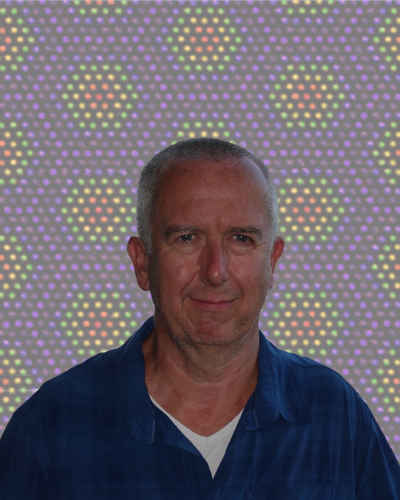
Dr. Lawrence Whitmore is a Senior Researcher in the Department of Chemistry and Physics of Materials at the Faculty of Natural and Life Sciences, University of Salzburg. He holds a PhD in Physics from the University of Surrey and has held research positions at the University of Cambridge, Technical University of Vienna, Montan University Leoben, and the National Institute of Physics Iasi. Since 2016, he has been involved in EU Interreg and FWF-DFG collaborative projects focusing on magnesium alloys using advanced microscopy techniques.
Dr. Whitmore's research is centered on materials characterization, particularly through transmission electron microscopy (TEM) and electron backscatter diffraction (EBSD). His work investigates microstructure-property relationships in magnesium and nickel-based alloys, deformation mechanisms such as twinning, and the development of innovative, sustainable sample preparation tools using 3D printing. He has made significant contributions to understanding the mechanical behavior of lightweight alloys under stress and has pioneered low-cost, open-access instrumentation for microscopy labs.
The recent publications highlight a strong trend toward sustainable science, with a focus on real-time in-situ mechanical testing of textured magnesium sheets, strain distribution analysis, and the design of 3D-printed precision tools for TEM sample preparation. His work bridges fundamental materials science with practical engineering applications, particularly in the automotive and aerospace sectors where lightweight materials are critical.
Dr. Whitmore has no listed scientific awards in the provided text.
He collaborates extensively with institutions such as the University of Applied Sciences, Landshut, and has been involved in major research projects including the FWF-DFG Dach project on deformation twinning in magnesium. There is no mention of grant leadership or student supervision in the provided information.
His research is conducted within the Chemistry and Physics of Materials group at the University of Salzburg, which supports advanced microscopy and materials testing facilities, including in-situ mechanical stages and high-resolution TEM.