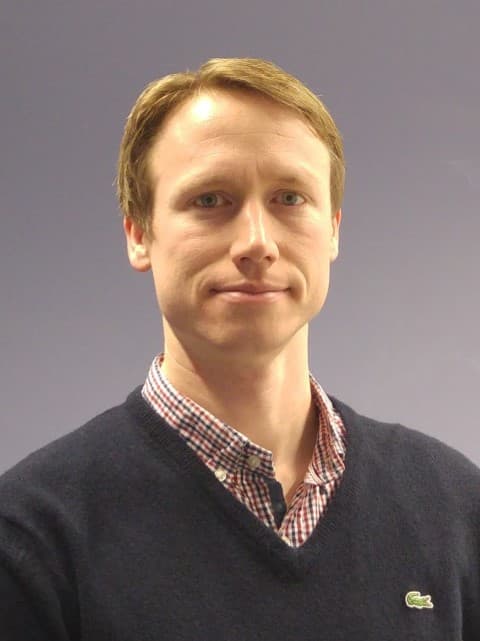
معرفی
Laurent Chapelle is a Doctor-assistant in the Department of Movement and Sport Sciences at the Faculty of Physical Education and Physiotherapy, Vrije Universiteit Brussel (VUB). His research primarily focuses on sports asymmetry, particularly in tennis players, examining both morphological and functional aspects across upper and lower extremities. He also investigates hydration status in athletes and body composition analysis using various methods including bioelectrical impedance.
Chapelle's research interests center around sports biomechanics and performance analysis, with particular emphasis on inter-limb asymmetry in tennis players. His work explores how asymmetries develop over time in youth athletes, their relationship with performance metrics, and implications for injury prevention. He employs longitudinal study designs to track changes in asymmetry patterns as athletes mature, contributing significantly to understanding sport-specific adaptations.
His publication record shows a clear trend toward increasingly sophisticated analysis of asymmetry in sports contexts, with recent work focusing on longitudinal patterns in tennis players, relationships between asymmetry and performance, and methodological approaches to measuring body composition. The research spans both upper and lower extremity asymmetries across multiple sports, with tennis being the primary focus.
- Gaston Beunen VBSW price for young promising researchers (2021)
- Public Young Investigator Award PhD student (2023)
Chapelle actively supervises master's students, with numerous theses completed under his guidance focusing on topics like upper extremity asymmetry in tennis players, validation of body composition measurement techniques, and functional asymmetry in various sports. His research is supported through collaborations with other prominent researchers including Joachim D'Hondt, Eva D'Hondt, and Peter Clarys. He has presented his findings at numerous conferences and workshops, and his work has been featured in media discussing hydration in athletes and sports performance.
Chapelle maintains active research labs focused on sports biomechanics and performance analysis, with datasets specifically related to asymmetry in tennis players, hydration studies, and body composition analysis. His research team continues to expand longitudinal tracking of youth athletes through talent identification programs.