معرفی
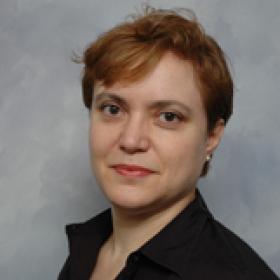
Laura Lucia Rossi is a Lecturer in Italian and Comparative Literature at the School of Languages, Cultures and Societies, University of Leeds, within the Faculty of Arts, Humanities and Cultures. She completed her PhD at the University of Leeds in 2018 and returned to the institution in 2020 as a Teaching Fellow before being appointed to her current role in 2023. She previously taught Italian Studies at the University of Manchester.
Education:
- PhD in Italian, University of Leeds (2018)
- DITALS I Certification in Teaching Italian L2/LS, Università per Stranieri di Siena (2012)
- MA in Modern Literary Studies, University of Milan (2012)
- BA in Literary Studies, University of Milan (2009)
Her research centers on narrative indeterminacy and reader-response theory, particularly expanding on Wolfgang Iser’s work. She investigates how literary incompleteness enables active meaning-making by readers and how this process relates to self-interpretation in autobiographical and adoption narratives. Her work bridges comparative literature, 20th-century Italian fiction, and trauma studies, with a focus on authors such as Federigo Tozzi, Tommaso Landolfi, Elio Vittorini, Carlo Emilio Gadda, Anna Maria Ortese, Jeanette Winterson, and Maria Grazia Calandrone.
While no individual publications are listed, her research output consistently engages with themes of literary theory, narrative structure, and identity formation, particularly in autobiographical and cross-cultural contexts.
Scientific Awards:
- No awards or fellowships mentioned.
She supervises postgraduate research students and welcomes PhD enquiries in her areas of expertise. She also serves as Director of Admissions for the School of Languages, Cultures and Societies. Her work is associated with the Centre for World Literatures and contributes to the Italian postgraduate research programme.
She is involved in research groups focusing on literary studies and comparative literature, with future work likely to continue exploring the intersections between narrative form, selfhood, and adoption experiences.