معرفی
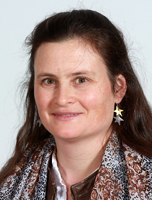
Professor Laura Harkness is a distinguished Professor in the Department of Physics at the University of Liverpool and serves as Associate pro-Vice Chancellor for Research and Impact for the Faculty of Science and Engineering. She has secured £36M in research funding as PI/CoI from UKRI and industry for R&D projects focused on next-generation instrumentation for gamma-ray spectroscopy and imaging. As a leader in international research collaborations, she has held key roles in the European AGATA nuclear physics project and chaired multiple external advisory boards and funding panels.
Professor Harkness's research spans nuclear physics, medical physics, and radiation detector development. Her work focuses on gamma-ray spectroscopy and imaging, particularly through Compton camera systems, with applications in nuclear structure physics, cancer diagnosis, and nuclear decommissioning. She has pioneered techniques for sub-voxel resolution in semiconductor detectors and developed algorithms for gamma-ray interaction position extraction. Her research has led to significant advancements in molecular breast imaging and quantitative imaging in molecular radiotherapy, addressing clinical challenges in cancer diagnosis.
Her publications demonstrate a strong focus on nuclear instrumentation, with particular emphasis on germanium detector technologies (HPGe, SIGMA, AGATA), CZT detectors for medical applications, and fundamental nuclear physics studies. The research shows a clear trajectory from fundamental detector development to clinical applications, particularly in cancer diagnosis technologies.
- European Physical Society Applied Nuclear Physics Prize (2024)
- Teacher of the Year – Faculty of Science and Engineering (University of Liverpool Guild of Students, 2017)
- Science Award - Highly Commended (Women of The Future, 2015)
- Very Early Career Award (Institute of Physics Women in Physics Group, 2010)
Professor Harkness has supervised over 15 PhD students and leads the STFC Cancer Diagnosis Network+, a national research network bringing together physicists, clinicians, and industry partners to develop new cancer diagnosis technologies. She has secured substantial research funding, including £5M as PI and £31M as CoI, supporting projects ranging from detector development to clinical applications. Her leadership extends to international collaborations including the AGATA project and the Mu2e experiment at Fermilab.
As coordinator of the AGATA Pulse Shape Analysis working group and leader of the UK AGATA programme, she oversees detector characterization and digital signal processing development. She also leads the STFC Cancer Diagnosis Network+, which has established a multidisciplinary community across 50 universities, companies and hospitals to translate STFC innovations into clinical impact for cancer diagnosis.